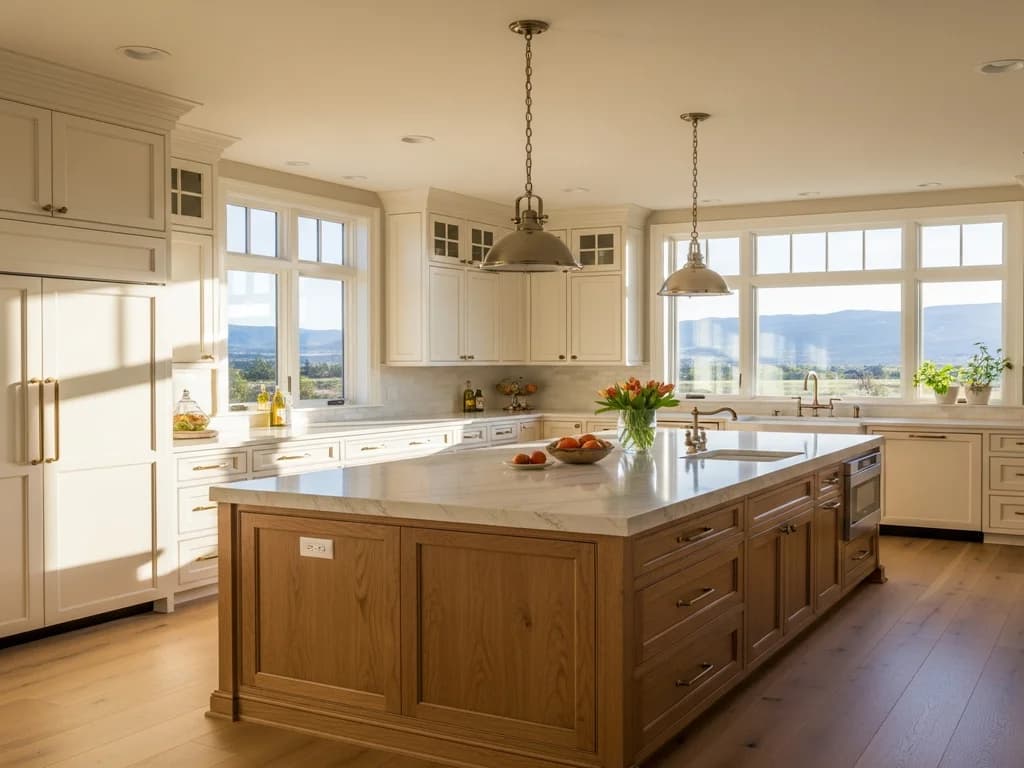
Why mixing metals works
For years the rule was that every metal in a kitchen had to match, which could leave a room feeling flat and showroom-like. Mixing finishes deliberately gives a kitchen depth and a collected, layered quality — the sense that it came together over time rather than out of a single catalog. Done with intention, mixed metals read as sophisticated; the key is that it looks like a choice, not an oversight.
A simple approach: two or three metals
The most reliable way to mix is to limit yourself to two, or at most three, finishes and give each a role. A common formula is a warm metal and a dark or cool one — brass hardware with matte-black or bronze fixtures, for instance. Let one finish lead as the dominant metal across the kitchen and use the second as an accent, rather than scattering finishes at random. That hierarchy — a lead and an accent — is what keeps a mix from tipping into a jumble.
- Stick to two or three finishes, not a scattering.
- Pair a warm metal (brass, bronze) with a cool or dark one (black, nickel).
- Let one finish dominate and the other play accent.
- Keep large fixtures like the faucet consistent with the lead metal.
Where each finish tends to land
A practical way to assign metals is by category. Cabinet hardware is a natural place for a warm metal like brass, which suits both painted and wood cabinetry; plumbing fixtures — the faucet and pot filler — often carry the more utilitarian nickel, stainless, or black; and lighting can either reinforce the dominant metal or introduce a considered contrast. Keeping the metals within a category consistent — all the cabinet pulls the same, all the plumbing the same — while varying between categories is an easy rule that almost always reads as intentional.
Consider tone and wear
Warm metals pair with warm woods and cool metals with cool, painted tones, so let the cabinetry’s undertone guide which metals feel at home. It’s also worth thinking about how each finish ages: living, unlacquered brass will patina over time — a look some love — while lacquered and satin finishes stay consistent, and matte black hides fingerprints better than polished finishes. We help coordinate hardware, and its relationship to the fixtures and lighting, during the design stage so the mix is planned rather than assembled piece by piece and hoped to match.
Frequently Asked Questions
Is it okay to mix metals in a kitchen?
Yes — mixing metals deliberately adds depth and a collected look. The key is to limit yourself to two or three finishes, let one dominate and the other accent, and keep metals consistent within a category (all the pulls alike, all the plumbing alike) so it reads as intentional.
How many metal finishes should a kitchen have?
Two or three is the sweet spot. A common approach pairs a warm metal like brass with a cool or dark one like black or nickel, giving each a clear role rather than scattering finishes at random.
Building or remodeling in the Treasure Valley?
Alderwood designs, builds, and installs custom cabinetry in-house across Idaho’s Treasure Valley. Tell us about your project and we’ll start with a design conversation.
Request a Consultation