What wall paneling adds
Paneling gives a flat wall dimension and a finished, considered look that paint alone can’t. Traditionally it also served a purpose — protecting the lower wall from chairs and scuffs — and that practicality still applies in dining rooms, entries, and mudrooms. Beyond the function, wall paneling signals craftsmanship: it reads as built-in architecture rather than surface decoration, which is why it’s a hallmark of higher-end and custom homes.
The main styles
A handful of paneling styles cover most homes. Wainscoting — paneling on the lower portion of a wall, capped with a chair rail — is the classic, at home in traditional and transitional interiors. Board-and-batten adds vertical battens over the wall for a crisp, rhythmic look that suits farmhouse and transitional homes and works especially well in entries and mudrooms. Shiplap, with its horizontal boards and subtle shadow lines, brings a relaxed, textural quality that fits the region’s mountain-modern and farmhouse homes. Full-height raised or flat-panel wainscoting reads the most formal.
- Wainscoting — lower-wall paneling with a chair rail; traditional and transitional.
- Board-and-batten — vertical battens; crisp, farmhouse-friendly.
- Shiplap — horizontal boards; relaxed, textural, mountain-modern.
- Full-height raised panel — the most formal, for dining rooms and studies.
Where it belongs
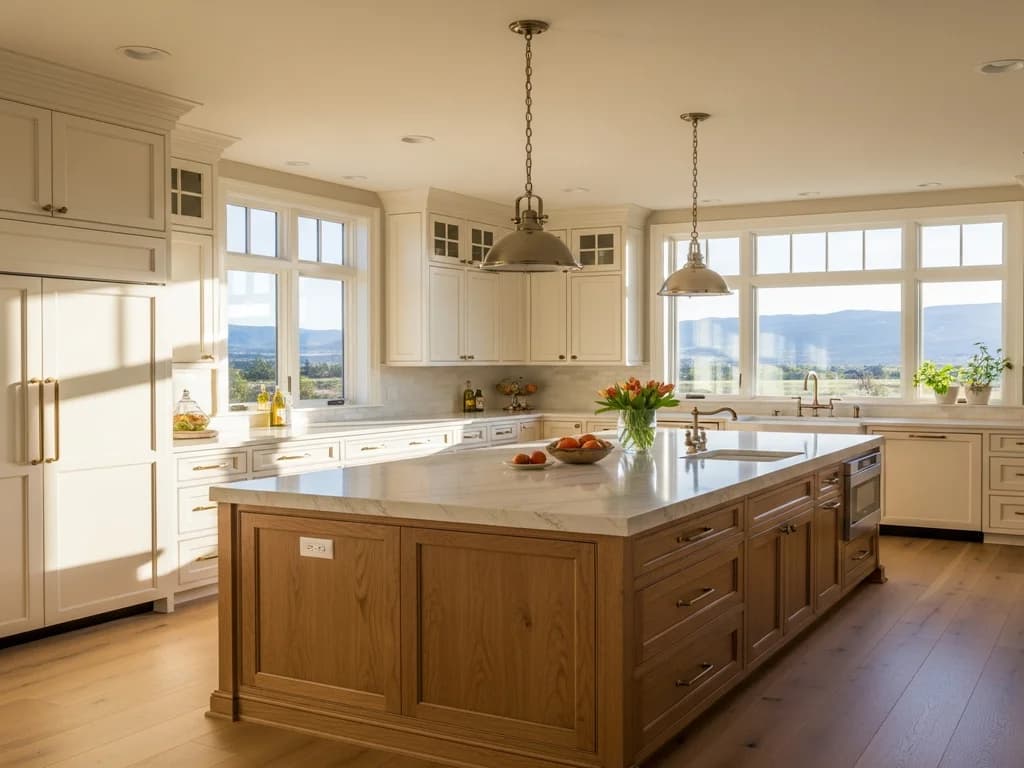
Paneling has the most impact where a room wants architecture: a dining room, an entry or stair hall, a mudroom that takes real wear, a powder room, or as a feature wall behind a bed or fireplace. It also pairs naturally with the kitchen and other cabinetry — a board-and-batten mudroom that shares the cabinetry’s paint, or a dining-room wainscot that echoes a kitchen’s detailing, ties the rooms of a home together. Used thoughtfully rather than everywhere, it elevates the spaces that carry a home’s first impression.
Why matching millwork matters
The value of having your cabinetry maker also produce the wall paneling is consistency. The same shop can match the profiles, the paint, and the level of detail between the cabinetry and the paneling, so a room reads as one coherent piece of millwork rather than parts sourced separately. We mill trim and paneling alongside the cabinetry, which lets a home carry a single design language from the kitchen into the entry, the dining room, and beyond — the quiet consistency that makes a house feel custom throughout.
Frequently Asked Questions
What’s the difference between wainscoting and board-and-batten?
Wainscoting is paneling on the lower part of a wall, usually capped with a chair rail, and reads traditional. Board-and-batten applies vertical battens over the wall for a crisper, more rhythmic look that suits farmhouse and transitional homes. Both add architecture and durability.
Should wall paneling match the kitchen cabinetry?
It reads best when it relates. Sharing paint, profiles, and detailing between the cabinetry and the paneling — which is straightforward when one shop makes both — ties a home’s rooms together into a coherent whole.
Building or remodeling in the Treasure Valley?
Alderwood designs, builds, and installs custom cabinetry in-house across Idaho’s Treasure Valley. Tell us about your project and we’ll start with a design conversation.
Request a Consultation