Why built-ins beat furniture here
A store-bought desk and a couple of shelves leave gaps, waste the vertical space, and rarely suit the room’s dimensions. Built-in office cabinetry uses the whole wall — floor to ceiling, corner to corner — turning otherwise dead space into desk surface, storage, and display. Because it’s built to the room, a desk can run exactly the length of the wall, a bank of files can tuck under the counter, and shelving can climb to the ceiling, all in a coordinated piece rather than a collection of mismatched furniture.
Plan around how you work
A good office built-in starts from your actual working habits: how much desk surface you need, whether one person works there or two, how much filing and supply storage the room has to hold, and whether it doubles as a library or a homework station. From there the cabinetry is planned — a generous desk run, file drawers, closed storage for supplies and a printer, and open shelving for books and display. Designing around the real workflow is what separates a built-in that works from a handsome wall of cabinetry that doesn’t quite fit the job.
- A desk run sized to the wall and to one or two users.
- File drawers and closed storage for supplies and a printer.
- Open shelving for books and display, up to the ceiling.
- Cable management and power planned into the cabinetry.
Hide the technology
Nothing undermines a handsome office like a tangle of cords. The advantage of custom built-ins is that power and cable management can be designed in — grommets and channels to route cables out of sight, a dedicated cabinet or drawer for the printer and modem, and outlets placed exactly where the equipment lives. A charging drawer keeps devices powered and off the desk. Planning this during design, when the cabinetry can be built to conceal the wiring, is far cleaner than trying to tame the cords after the fact.
Part of the home’s millwork
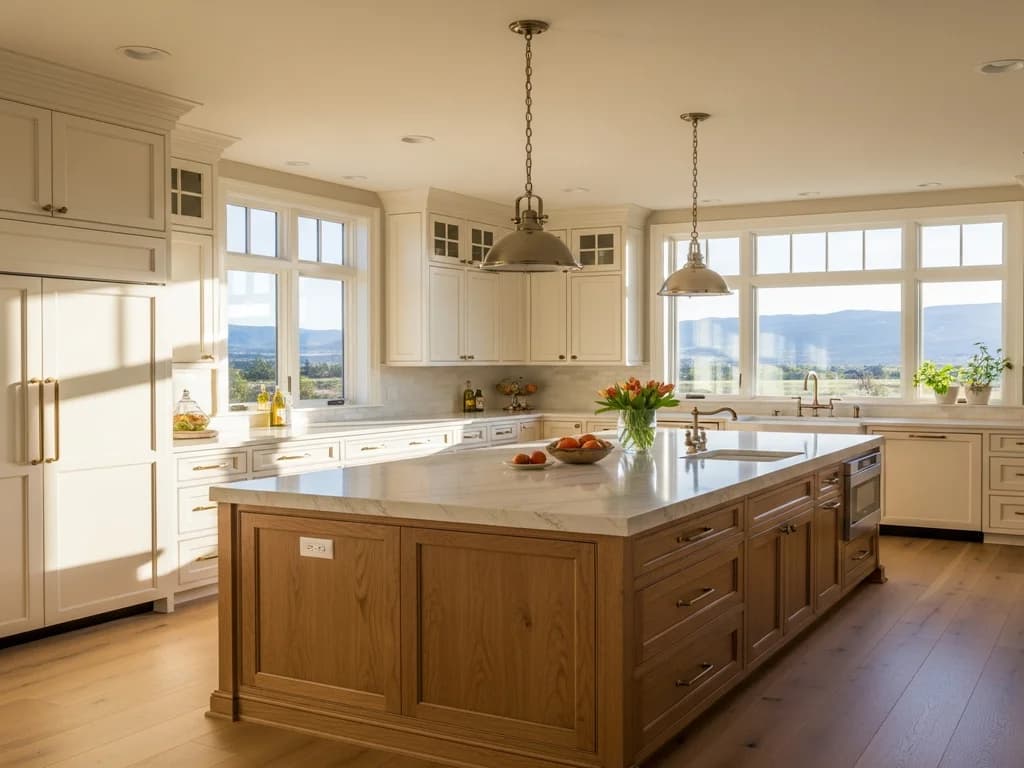
A home office is often visible from, or open to, the rest of the house, so its built-ins read best when they relate to the home’s other cabinetry. Sharing a wood, paint, or level of detail with the kitchen and other millwork ties the office into the whole. Because the same shop builds it all, an office built-in can carry the home’s design language rather than looking like a separate office-furniture purchase — which is what makes a working room feel like a considered part of the house.
Frequently Asked Questions
Are built-in office cabinets better than freestanding furniture?
For most rooms, yes. Built-ins use the full wall and vertical space, fit the room’s exact dimensions, and integrate the desk, storage, and shelving into one coordinated piece, where freestanding furniture leaves gaps and wastes space.
Can you hide computer cables in a built-in desk?
Yes — that’s a real advantage of custom work. Grommets, cable channels, a dedicated printer cabinet, well-placed outlets, and a charging drawer can all be designed in so the technology stays powered and out of sight, which is far cleaner than managing cords after the fact.
Building or remodeling in the Treasure Valley?
Alderwood designs, builds, and installs custom cabinetry in-house across Idaho’s Treasure Valley. Tell us about your project and we’ll start with a design conversation.
Request a Consultation