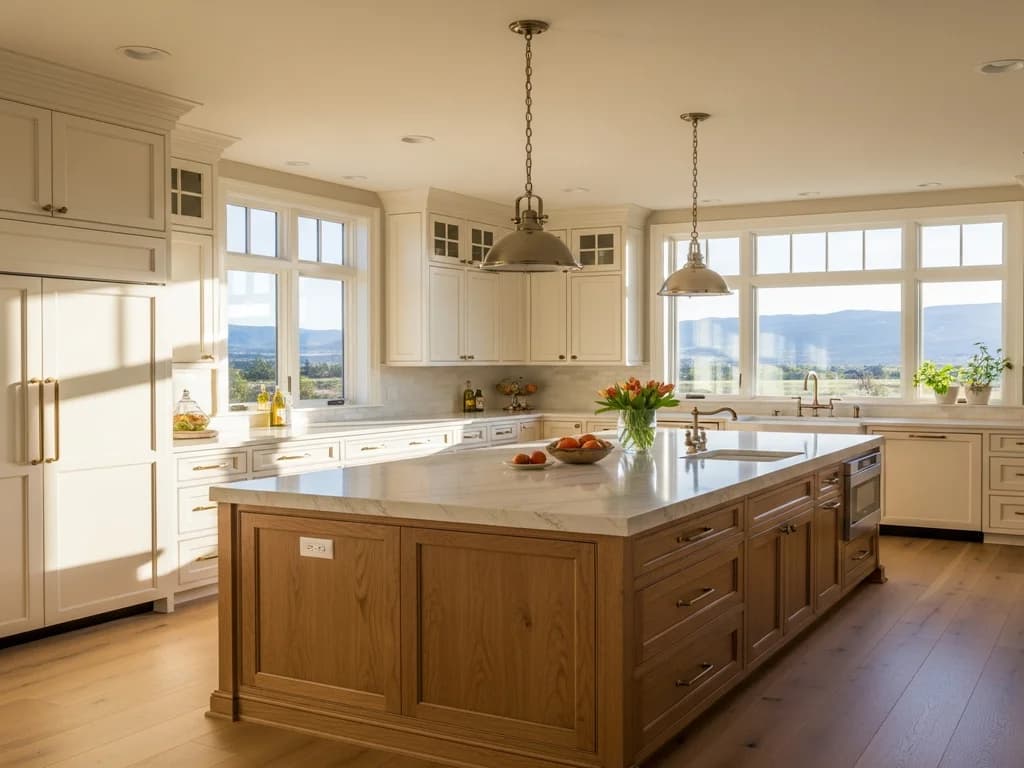
What sheen means
Sheen is simply how much light a finish reflects, measured on a scale from flat and matte at the low end through satin in the middle to semi-gloss and high gloss at the top. It’s a separate choice from the color and the type of topcoat — you can have a durable conversion-varnish finish in a matte or a satin sheen. Sheen has a big effect on how a kitchen reads: the same green paint looks contemporary and soft in matte and crisper and more traditional in satin.
Matte: soft, modern, and forgiving of reflections
A matte or low-sheen finish reflects little light, giving a soft, understated, contemporary look that’s very much in favor. It suits deep colors and natural wood especially well, letting the color and grain speak without a shine competing. Because it doesn’t bounce light, matte hides surface imperfections and reflections. Its one trade-off is that a very flat finish can show fingerprints and be marginally less wipe-clean than a satin, though quality matte topcoats have largely closed that gap.
- Matte — soft, modern; flatters deep colors and wood; hides reflections.
- Satin — a subtle glow; the versatile, easy-clean middle ground.
- Semi-gloss/gloss — reflective and bold; shows every flaw and smudge.
- Sheen is chosen separately from color and topcoat type.
Satin: the versatile middle ground
Satin is the most popular cabinet sheen for good reason — it has a gentle, low glow that feels finished without being shiny, and its slight sheen makes it easy to wipe clean and durable in a working kitchen. It flatters both painted and stained cabinetry and reads as a touch more classic than a dead-flat matte. For homeowners who want a safe, timeless choice that’s practical for daily cooking, satin is the reliable default.
Where gloss fits, and how to decide
High-gloss cabinetry is bold and striking, most at home in sleek, contemporary and European-style kitchens where its reflective surface is the point. The caution is that gloss shows everything — every fingerprint, smudge, and surface imperfection — so it demands flawless substrate preparation and more frequent wiping. For most Treasure Valley homes, matte and satin cover the range from soft-modern to classic. The surest way to choose is to see sample doors in your kitchen’s actual light, since sheen reads very differently under different lighting, which is why we finish samples in the real sheen before committing.
Frequently Asked Questions
What’s the most popular sheen for kitchen cabinets?
Satin. Its gentle low glow looks finished without being shiny, wipes clean easily, and flatters both painted and stained cabinetry, which makes it the versatile default for a working kitchen. Matte is close behind for a softer, more modern look.
Do matte cabinets show fingerprints more than satin?
A very flat finish can show fingerprints slightly more and be marginally less wipe-clean than satin, though quality matte topcoats have largely closed that gap. High-gloss finishes show fingerprints and imperfections the most.
Building or remodeling in the Treasure Valley?
Alderwood designs, builds, and installs custom cabinetry in-house across Idaho’s Treasure Valley. Tell us about your project and we’ll start with a design conversation.
Request a Consultation