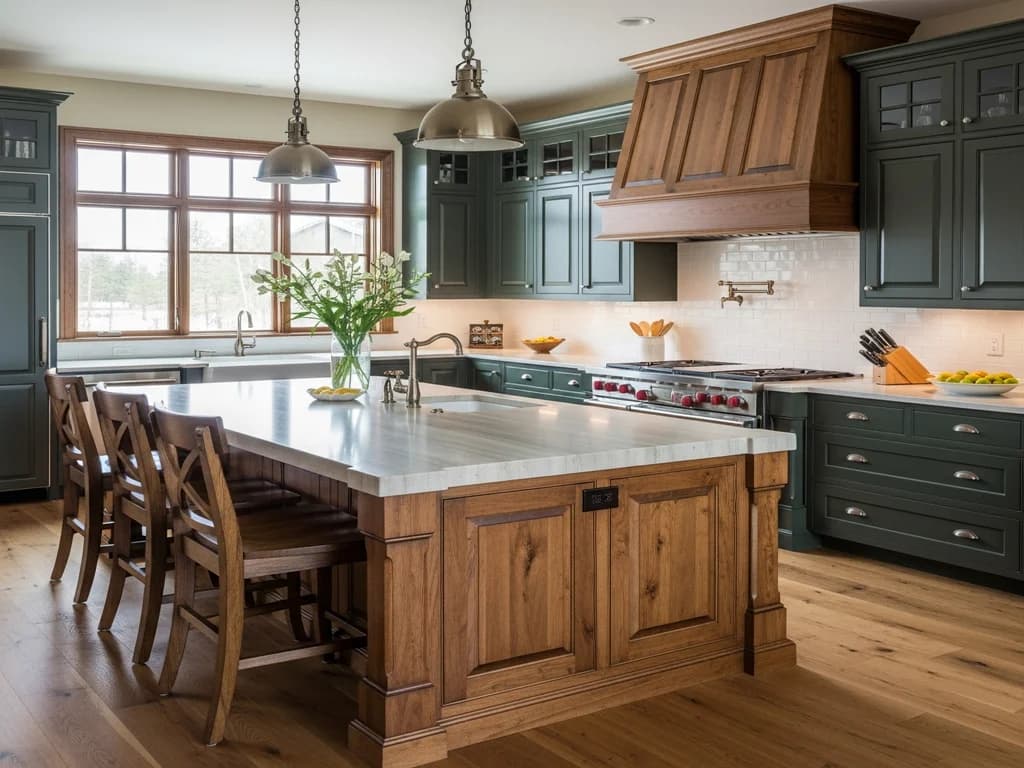
What each finish actually is
A stain is a semi-transparent color that soaks into the wood and lets the grain show through, sealed with a clear topcoat. Paint is an opaque, film-forming finish that sits on the surface and hides the grain, giving a smooth, uniform color. Those two facts explain almost every practical difference between them.
The look
Stain is the choice when you want to see and celebrate the wood — the figure of white oak, the character knots of alder, the contrast of hickory. Paint is the choice when you want a clean, consistent color and a furniture-smooth surface, which is why classic white and off-white kitchens are painted rather than stained.
Many Treasure Valley kitchens split the difference with a two-tone scheme — painted perimeter cabinets with a stained island, or vice versa — to get the warmth of wood and the crispness of paint in the same room.
Durability and how each ages
A quality catalyzed finish on either paint or stain is hard and washable. The difference is how they show wear over years of use. On painted cabinets, especially on joints where two pieces of wood meet, seasonal wood movement can eventually produce fine hairline lines at the seams — most visible on white paint. This is a known characteristic of painted wood, not a defect, and it is more pronounced in climates with big humidity swings.
Stain hides the same movement far better, because there is no continuous paint film to telegraph a seam and the color varies naturally across the grain. Stained cabinets also tend to disguise the small dings of daily life more gracefully than a solid painted surface.
Why the substrate matters
Paint wants a fine, closed grain, which is why painted cabinetry is usually built on maple, or maple rails and stiles with an MDF center panel. MDF panels are dimensionally stable and paint dead-flat, which reduces the seam movement described above. Stain, by contrast, wants a wood with attractive grain to show off — alder, oak, hickory, walnut. Choosing the finish and the species together, rather than separately, gives the best result.
The Idaho climate factor
The Treasure Valley’s low indoor humidity and seasonal swings make wood movement a real consideration for any solid-wood cabinetry. Good construction manages it: properly acclimated stock, floating panels that can expand and contract, and MDF centers under paint where flatness matters. With those in place, both painted and stained cabinets perform well here — the climate shapes how they’re built more than which one you can choose.
Frequently Asked Questions
Do painted cabinets crack in a dry climate?
They don’t crack, but painted solid-wood joints can develop fine hairline lines at the seams over time as the wood moves seasonally. Building painted doors on MDF center panels greatly reduces this, and it’s far less visible on stained finishes.
Which is easier to touch up later?
Stain is generally more forgiving for spot repairs because the grain hides blending, while matching an aged painted finish exactly can be harder. Either way, keeping a small amount of the original finish helps.
Building or remodeling in the Treasure Valley?
Alderwood designs, builds, and installs custom cabinetry in-house across Idaho’s Treasure Valley. Tell us about your project and we’ll start with a design conversation.
Request a Consultation