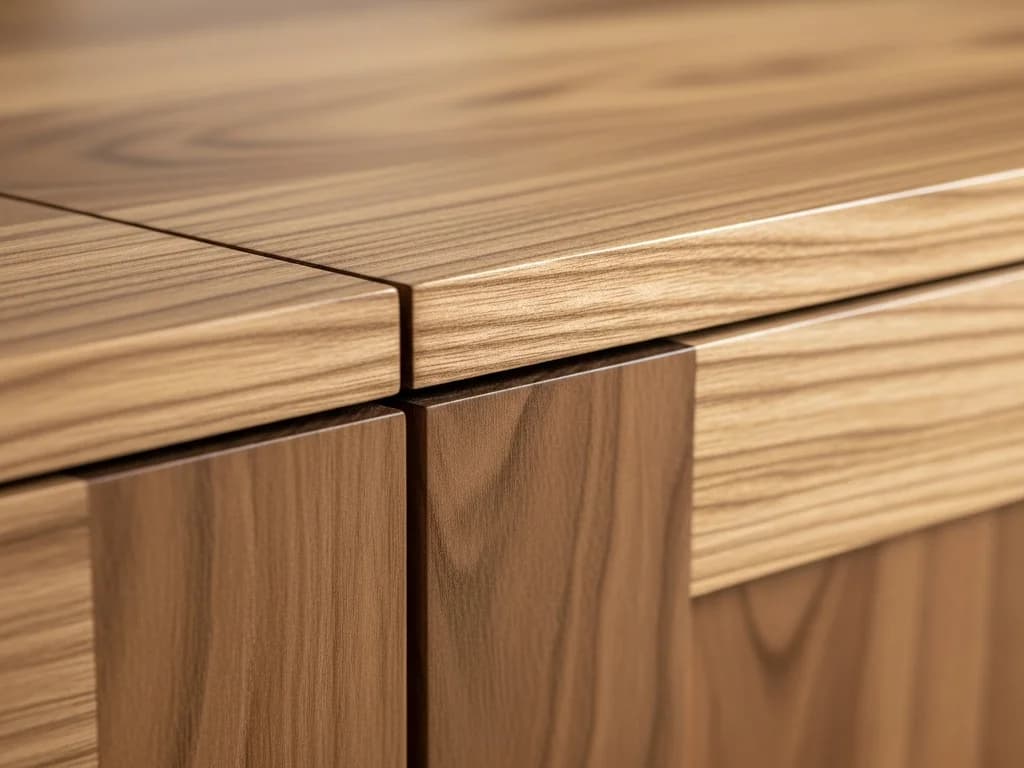
Why wood moves
Wood is hygroscopic — it takes on and gives off moisture as the surrounding humidity changes, and it swells and shrinks as it does. The movement happens mostly across the grain, not along its length, and it’s seasonal: wider in humid months, narrower in dry ones. This is normal and permanent; you don’t stop wood from moving, you build so the movement doesn’t cause problems.
Idaho’s dry, swinging climate
The Treasure Valley sits in high desert with low humidity much of the year, plus winter heating that dries indoor air further and warmer, more humid stretches in between. That range means solid-wood components go through a real annual cycle. Cabinetry built for a humid coastal climate and shipped here can arrive at equilibrium differently than cabinetry built and acclimated locally — one reason building in-region has a practical advantage.
How good construction handles it
Sound cabinetmaking anticipates movement rather than fighting it. The classic solution is frame-and-panel construction, where a solid-wood panel floats in a groove so it can expand and contract without splitting the door or pushing the joints apart. Engineered plywood cases stay dimensionally stable where solid wood wouldn’t. And using MDF for painted center panels removes movement exactly where a continuous paint film would otherwise reveal it.
- Floating panels in frame-and-panel doors absorb seasonal movement.
- Plywood cases resist the swelling and shrinking of wide solid panels.
- MDF center panels keep painted surfaces flat and seam-free.
- Acclimating stock to local conditions before building sets it up to stay put.
What it means for your finish
Movement is the reason painted joints can eventually show fine hairline lines at the seams, as covered in our painted-versus-stained guide — the wood shifts under a rigid film. Stained finishes hide the same movement far better. Neither is a defect; both are managed by building on the right substrate and detailing the doors correctly. Inset cabinetry, with its tight door-to-frame gaps, is where movement is most visible, so it especially rewards proper acclimation and construction.
Keeping cabinetry stable at home
Homeowners can help by keeping indoor conditions reasonably steady — avoiding wild humidity extremes, running heat and cooling normally rather than leaving a house closed up and unconditioned for long stretches. Well-built cabinetry is designed to take Idaho’s seasonal swing in stride; steady indoor conditions simply make its job easier.
Frequently Asked Questions
Will my solid-wood cabinets crack in Idaho’s dry air?
Properly built cabinetry won’t. Frame-and-panel doors with floating panels, plywood cases, and stock acclimated to local conditions are all designed to accommodate the seasonal movement that dry air causes.
Does humidity affect painted cabinets differently than stained?
The wood moves the same either way, but a painted film can eventually show fine seam lines where a stained finish hides them. Building painted doors on MDF center panels largely prevents this.
Building or remodeling in the Treasure Valley?
Alderwood designs, builds, and installs custom cabinetry in-house across Idaho’s Treasure Valley. Tell us about your project and we’ll start with a design conversation.
Request a Consultation