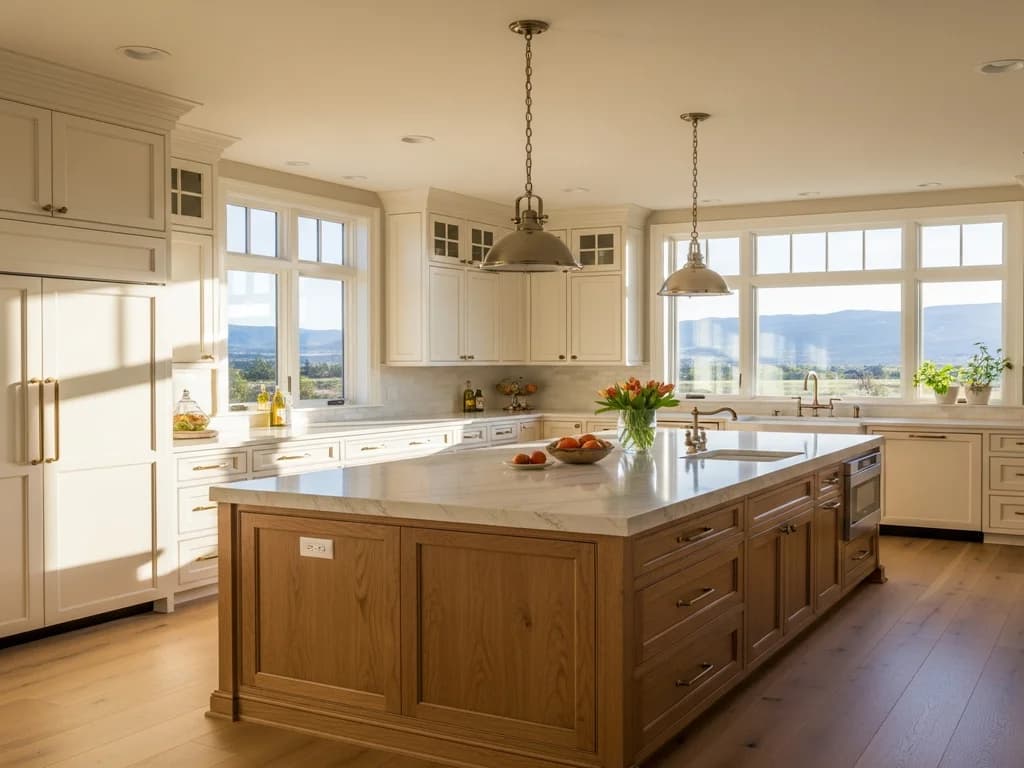
Display walls and feature racking
At the visible end of the spectrum, a wine wall turns a collection into a design feature — bottles racked in the open as part of a dining room, bar, or great-room millwork. Display racking is about proportion and presentation: how the bottles are arrayed, how the storage is lit, and how the woodwork ties into the surrounding room. It’s ideal for the wine you’re drinking now and want to show, rather than long-term aging, and it reads as a custom, built-in centerpiece.
Cabinet and base wine storage
Integrated into kitchen or bar cabinetry, wine storage can take the form of racking within a cabinet, angled bottle shelves, or a run tuned to specific bottle formats. A beverage or bar zone might combine bottle storage, stemware racks, and a spot for a wine refrigerator. This is the practical middle ground — organized, attractive storage for a modest, active collection without dedicating a whole room to it.
Climate-ready cellars
For serious collectors aging wine over years, a dedicated cellar is the goal. Here the cabinetry and racking are designed for a climate-controlled space, sized to a real bottle count and to the mix of formats — standards, magnums, cases — a collection holds. The millwork has to suit a room where temperature and humidity are managed, and the racking planned around both the current collection and the one it’s growing into. This is as much an engineering and planning exercise as an aesthetic one.
- Display wall — open racking as a room feature, for wine you’re drinking now.
- Cabinet storage — integrated racking and a bar zone for an active collection.
- Climate-ready cellar — racking sized to a real, growing collection for aging.
Planning around the collection and the room
The honest starting point for any wine storage is two questions: how many bottles, in what formats, and is this for drinking or aging? Those answers determine whether you need a display wall, integrated cabinet storage, or a true cellar — and how the racking should be sized. Because we design and build the storage in-house and finish it to match the surrounding millwork, the result reads as part of the home rather than a bolted-on appliance. Idaho’s own Sunnyslope wine country near Caldwell and the estate homes of Eagle both tend to grow collections, and both reward storage built as genuine cabinetry.
Frequently Asked Questions
Do I need a climate-controlled cellar to store wine?
Only if you’re aging wine over years. For bottles you’re drinking now, a display wall or integrated cabinet racking is plenty. A climate-ready cellar matters for a serious, growing collection meant for long-term aging.
How do you size wine racking?
Around the collection — its current bottle count, the formats it holds, and how much it’s expected to grow. We design racking to those numbers so it fits the wine you have and the wine you’re planning for, then finish it to match the room.
Building or remodeling in the Treasure Valley?
Alderwood designs, builds, and installs custom cabinetry in-house across Idaho’s Treasure Valley. Tell us about your project and we’ll start with a design conversation.
Request a Consultation