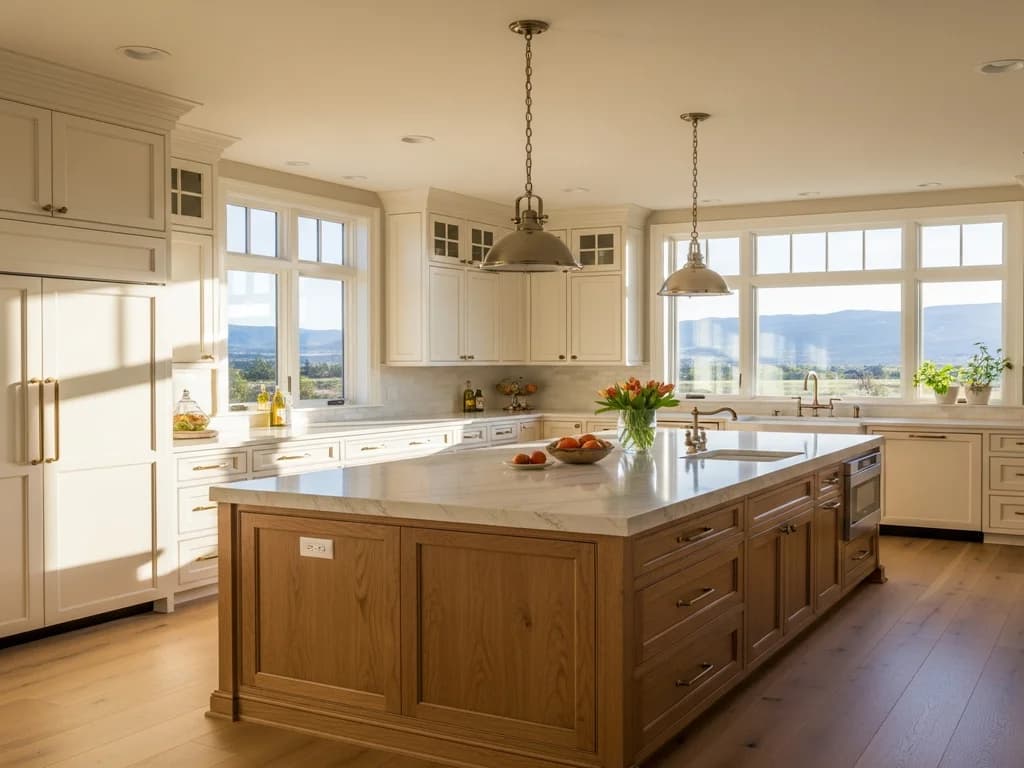
Everyday cleaning, done gently
The best cabinet care is also the simplest: wipe spills and splatters promptly with a soft, damp cloth and dry them off, rather than letting moisture sit on a finish or seep into a joint. For routine cleaning, a mild soap and water on a soft cloth is almost always enough. What to avoid is just as important — skip abrasive pads, harsh all-purpose sprays, and anything with ammonia or bleach, which can dull or damage a fine finish over time. Wax-based or silicone “polishes” tend to build up and are best avoided too.
Understand the seasonal movement
Solid wood responds to humidity, and the Treasure Valley’s big seasonal swings — dry winters with heated indoor air, more humid stretches in between — mean your cabinetry goes through a natural annual cycle. You may notice the tiniest changes in a door’s fit or, on painted cabinetry, fine hairline lines at some joints as the seasons turn. This is normal behavior of a natural material, not a defect, and quality construction is designed to accommodate it. Knowing it’s expected saves a lot of worry.
Keep indoor conditions reasonably steady
The single most helpful thing a homeowner can do is avoid extremes. Running heat and cooling normally rather than leaving a house closed up and unconditioned for long stretches keeps the indoor climate — and the wood — more stable. In the driest part of an Idaho winter, some homeowners run a humidifier for comfort, which incidentally eases the swing the cabinetry sees. None of this requires obsessing over a hygrometer; it just means treating the house as lived-in.
- Wipe spills promptly with a soft, damp cloth; dry afterward.
- Use mild soap and water — no abrasives, ammonia, or bleach.
- Expect small seasonal movement; it’s normal, not a defect.
- Keep indoor conditions steady rather than swinging to extremes.
The hardware and the long view
Quality soft-close hinges and slides are built to last, but a little attention keeps them tight: concealed European hinges are adjustable in three directions, so a door that drifts slightly out of alignment as a house settles can be dialed back to an even reveal in minutes. Keeping a small amount of your original finish on hand makes the occasional touch-up easier down the road. Cared for this way, solid-wood cabinetry is a decades-long fixture of a home, not a surface that wears out.
Frequently Asked Questions
How should I clean my custom cabinets?
A soft, damp cloth with mild soap and water is best, drying afterward. Avoid abrasive pads, ammonia, bleach, and wax or silicone polishes, which can dull or build up on a fine finish over time.
Is it normal for painted cabinets to show fine lines at the joints in a dry climate?
Yes. As solid wood moves seasonally, painted joints can develop fine hairline lines at the seams. It’s a known characteristic of painted wood in a swinging climate, not a defect, and building on MDF center panels minimizes it.
Building or remodeling in the Treasure Valley?
Alderwood designs, builds, and installs custom cabinetry in-house across Idaho’s Treasure Valley. Tell us about your project and we’ll start with a design conversation.
Request a Consultation