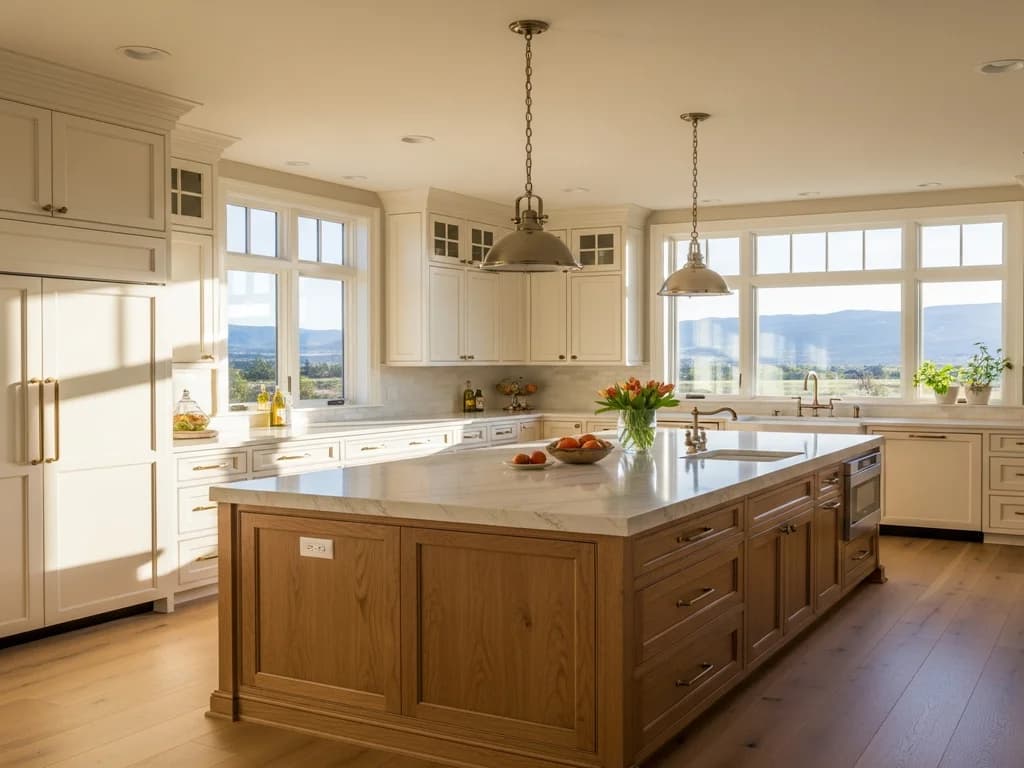
The foundation: stain and paint
Most finishes start from one of two bases. A stain is a semi-transparent color that soaks in and lets the grain show, sealed with a clear topcoat; paint is an opaque, film-forming color that hides the grain for a smooth, uniform surface. Everything below is a technique layered onto or alongside these two foundations to add depth, age, or texture that a flat stain or paint alone doesn’t give.
Glazing: depth and definition
Glazing is a tinted, semi-transparent layer applied over a stained or painted base and then partially wiped back, so it settles into the profiles, corners, and grain and highlights the detailing. On a painted door, a glaze catches in the recesses of a raised panel or the edges of a Shaker frame to add subtle definition and a hint of age. On stained wood, it deepens the tone and enriches the grain. Used lightly it’s refined; used heavily it reads more traditional and rustic. It’s one of the most effective ways to make cabinetry feel layered rather than flat.
Distressing, wire-brushing, and texture
Several techniques add character through texture. Distressing introduces gentle wear — softened edges, small dents, and marks — so new cabinetry reads as comfortably aged, a natural fit for farmhouse and lodge-style Idaho homes. Wire-brushing physically opens the soft grain of woods like oak to create a tactile, rustic-modern surface that’s become popular in mountain-modern kitchens. These are deliberate, controlled effects, applied where the style calls for them rather than everywhere.
- Glazing — a wiped-back tinted layer that adds depth and highlights detail.
- Distressing — controlled wear for a comfortably aged look.
- Wire-brushing — opens the grain for a tactile, rustic-modern surface.
- Two-tone and layered finishes — for contrast and richness.
The topcoat that makes it last
However a cabinet is colored, the durability comes from the topcoat. Quality custom cabinetry is finished with a catalyzed clear coat — a hard, chemically cured finish that resists moisture, cleaning, and daily wear far better than a simple wipe-on finish. The finishing is done in the shop under controlled conditions, with proper cure time between coats, which is exactly why a multi-step or painted finish can’t be rushed. In Idaho’s dry, swinging climate, a well-applied catalyzed finish on the right substrate is what keeps the color and surface looking right for years.
Frequently Asked Questions
What does glazing do to cabinets?
Glaze is a tinted layer applied over paint or stain and wiped back, so it settles into the profiles and grain to add depth, definition, and a hint of age. Light glazing looks refined; heavier glazing reads more traditional or rustic.
Why does a painted or multi-step finish take longer to build?
Because finishing can’t be rushed. Each coat needs proper cure time, and techniques like glazing or a catalyzed topcoat add steps. The finishing is done in the shop under controlled conditions, which is what makes it durable.
Building or remodeling in the Treasure Valley?
Alderwood designs, builds, and installs custom cabinetry in-house across Idaho’s Treasure Valley. Tell us about your project and we’ll start with a design conversation.
Request a Consultation