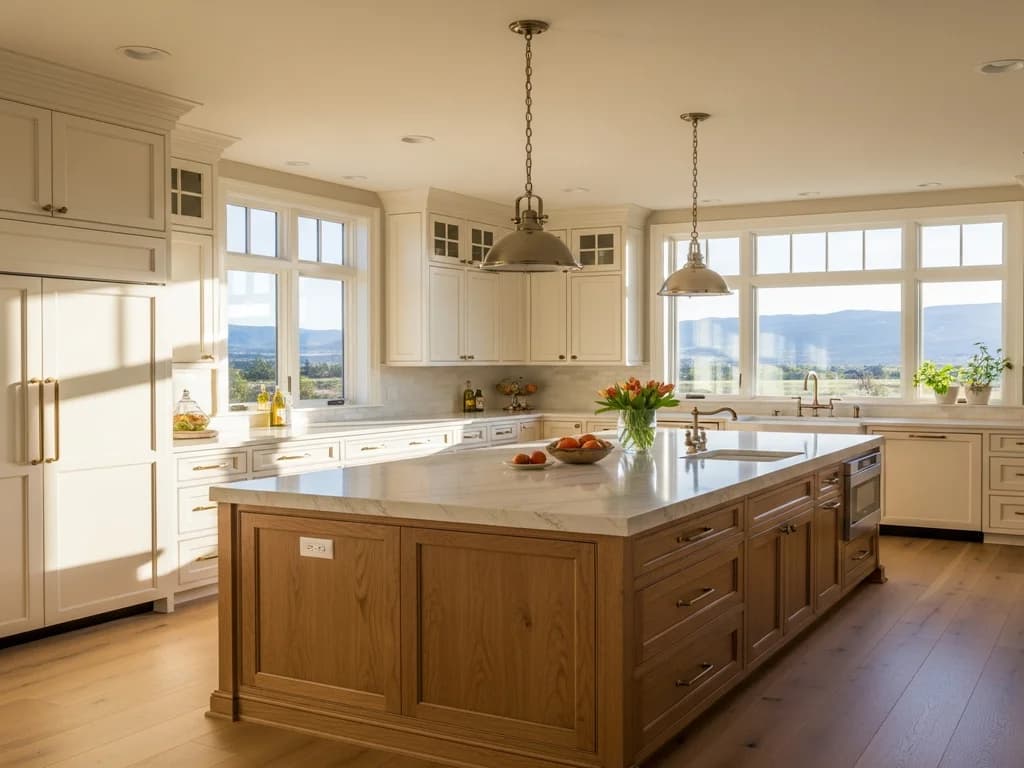
What veneer actually is
A wood veneer is a thin slice of real wood bonded to a stable substrate like plywood or MDF. The visible surface is genuine wood — the same species and grain as the solid lumber — but it’s backed by a core that won’t move the way a wide solid panel does. This is fundamentally different from a printed laminate or a photographic “wood-look” finish, which are imitations. A real wood veneer is real wood; the difference is only in how thick the wood is and what’s behind it.
Where veneer is the better choice
On large flat surfaces — the end panel of a cabinet run, a tall pantry door, a refrigerator panel, a slab door — a wide piece of solid wood would be prone to cupping, splitting, and seasonal movement. A veneered panel over a stable core stays flat and true, which is exactly why high-end modern cabinetry, with its large slab fronts, relies on veneer for those surfaces. Veneer also allows sequence-matched grain, where consecutive slices from the same log are laid side by side so the grain flows continuously across a run — a refined effect that solid boards can’t achieve.
- Large flat panels — veneer over a stable core stays flat where solid would move.
- Slab and modern doors — veneer gives the seamless look these styles want.
- Sequence-matched grain — continuous flow across a run, impossible in solid.
- Exotic species — veneer makes rare woods affordable and stable.
Where solid wood still leads
Solid wood remains the right material where strength and machining matter: door frames and stiles, face frames, drawer boxes, and any edge or profile that will be shaped or take real wear. You can’t rout a decorative edge into a thin veneer, and a frame needs the structural integrity of solid lumber. The best cabinetry combines the two — solid-wood frames and structure with veneered panels on the broad flat surfaces — so each material does what it’s best at.
Judging veneer quality
Not all veneer is equal, so quality matters. A good cabinet-grade veneer is thick enough to be durable, bonded to a stable core, and carefully matched for grain and color; a cheap one can be thin and poorly backed. The distinction that matters most for a buyer is real wood veneer versus a printed imitation — the former is genuine wood and belongs in fine cabinetry, the latter is a look-alike surface. We use quality wood veneers exactly where they outperform solid wood and solid lumber everywhere it leads, which is simply how well-built cabinetry is made.
Frequently Asked Questions
Is veneer cheaper or lower quality than solid wood?
Not inherently. A quality wood veneer is real wood bonded to a stable core, and on large flat panels it’s actually the better choice because it stays flat where wide solid wood would cup or split. Fine cabinetry uses veneer and solid wood each where it performs best.
What’s the difference between veneer and a laminate wood-look?
A wood veneer is a thin slice of genuine wood, so the surface is the real species and grain. A laminate or photographic wood-look is a printed imitation. The distinction that matters is real wood versus a look-alike — veneer is real wood.
Building or remodeling in the Treasure Valley?
Alderwood designs, builds, and installs custom cabinetry in-house across Idaho’s Treasure Valley. Tell us about your project and we’ll start with a design conversation.
Request a Consultation