Kitchen Cabinet Style
Transitional Kitchen Cabinets
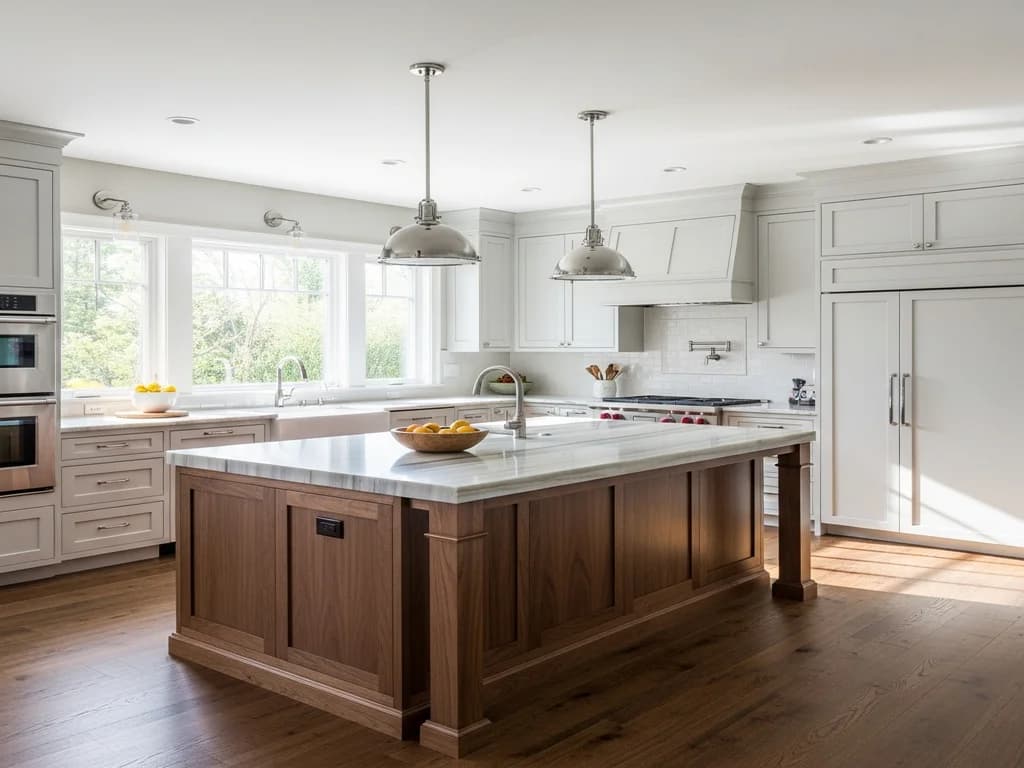
The middle ground between traditional and modern — a painted Shaker perimeter, a warm wood island, and quiet detail that reads current without chasing a trend.
What transitional actually means
Transitional is less a fixed look than a balance. It borrows the clean simplicity of modern and the comfort of traditional, then settles between them. In practice that usually means a Shaker door — clean-lined but still framed — painted in a soft, livable color, paired with a warm wood island and hardware that is present but understated.
The appeal is that it never tips too far in either direction. It avoids the coldness some homeowners fear in a strictly modern kitchen and the formality of a fully traditional one. That balance is why transitional has become the default direction for so many Treasure Valley homes: it feels fresh now and is unlikely to date quickly.
Doors, color, and materials
The Shaker door is the backbone of transitional cabinetry. Its flat center panel and square frame are simple enough to read modern yet familiar enough to feel timeless. Built full-overlay for a clean face or inset for a more tailored, furniture-grade result, the same door can shift the whole room a degree toward modern or traditional.
Color carries much of the mood. Soft whites and warm greiges keep a room light and open; a deep green, navy, or charcoal on a perimeter or island adds depth and confidence. Two-tone schemes — painted perimeter, stained wood island — are especially at home in transitional kitchens, giving warmth and a focal point without committing the whole room to one color.
Hardware and finishing details
Hardware in a transitional kitchen is deliberately quiet: a simple bar pull, a round or elongated knob, or a mix of the two, usually in brushed brass, matte black, or a warm bronze. It should feel considered rather than decorative — a piece of jewelry, not a statement.
The details that lift a transitional kitchen are subtle. A furniture-style island with legs or a shaped end panel, a simple wood range hood, glass-front uppers to break a solid run, and clean crown or a flat reveal at the ceiling all add interest without clutter. Restraint is the whole game.
How it reads in a Treasure Valley home
Transitional suits nearly every kind of home we build for — a foothills remodel, an Eagle new build, a Meridian production home elevated with custom cabinetry. Because it is neither aggressively modern nor strictly traditional, it settles comfortably into the mixed architecture of the valley and photographs as current in any of them.
It is also the most resale-friendly direction. A soft, well-proportioned transitional kitchen appeals broadly, which matters in a region where many homeowners build or remodel with an eye toward long-term value. It looks intentional without alienating the next buyer.
Who it is for
Transitional is for homeowners who cannot quite decide between modern and traditional — and who, once they see the balance, realize that is exactly what they wanted. It is forgiving, flexible, and easy to live with, which is why it is the safest way to get a fresh, timeless kitchen.
If you want to lean warmer and more rustic, look at farmhouse and craftsman; if you want to lean cleaner, look at modern and mountain-modern. Transitional sits comfortably at the center of all of them.
From the Journal
Read More on Transitional Kitchens
Transitional Cabinets: Common Questions
What is the difference between transitional and modern?
Modern removes detail entirely — flat slab doors, no framing, minimal hardware. Transitional keeps a degree of traditional framing, most often a Shaker door, and adds warmth through wood and color. Think of transitional as modern with a softer, more familiar edge that most homeowners find easier to live with.
Is a two-tone kitchen considered transitional?
Very often, yes. A painted perimeter with a contrasting stained-wood island is one of the most common transitional moves — it adds warmth and a focal point while keeping the overall look clean. Two-tone can also read traditional or modern depending on the door and colors, so we tune it to your home during design.
Will a transitional kitchen still look current in ten years?
It is one of the most durable directions precisely because it avoids trend extremes. Soft colors, a Shaker door, natural wood, and restrained hardware have looked right for decades and are unlikely to date the way a highly stylized kitchen can. Choosing quiet, quality materials is the best insurance against a kitchen feeling dated.
Explore Other Kitchen Styles
Ready to Build a Transitional Kitchen?
Every Alderwood kitchen begins with a design conversation. Tell us about your home and how you live in it, and we’ll design, build, and install a kitchen that fits your space exactly.