Kitchen Cabinet Style
Traditional Kitchen Cabinets
Depth, detail, and furniture-grade craftsmanship — raised panels, inset construction, and rich woods for homes that want a formal, timeless kitchen.
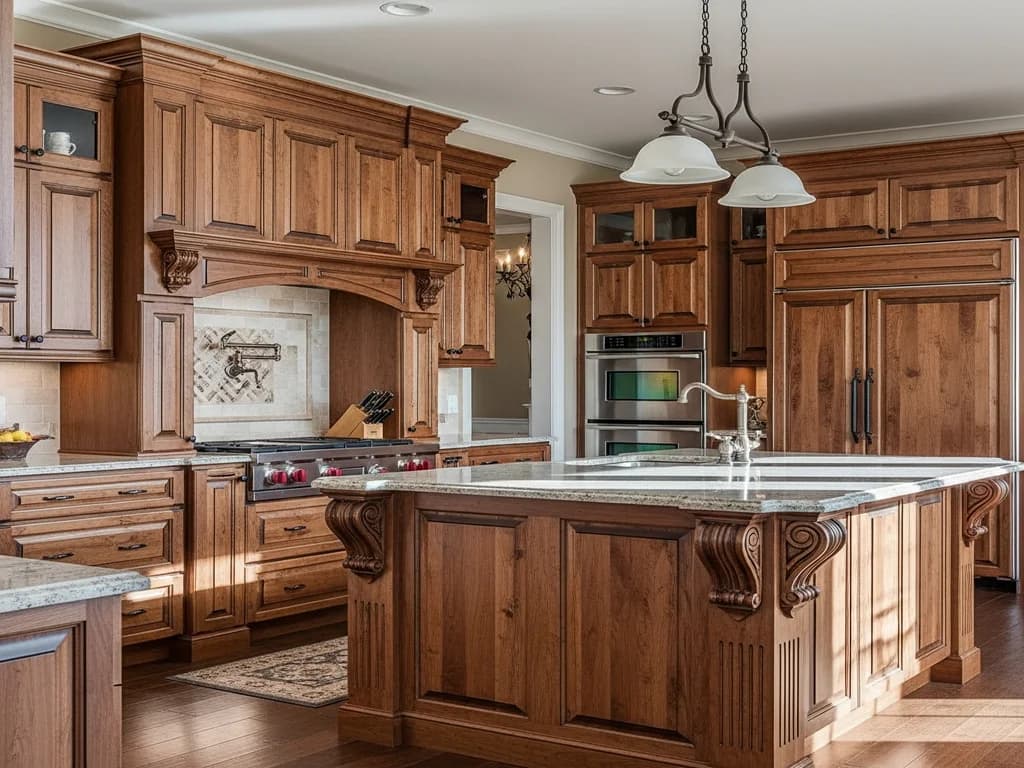
What defines a traditional kitchen
Traditional cabinetry is about depth and detail. Raised-panel doors, applied mouldings, furniture-style islands, decorative feet, fluted columns, and layered crown all add shadow, richness, and a sense of permanence. Where modern removes, traditional composes — every element is chosen to build a cohesive, formal whole.
Done well, a traditional kitchen reads as built-in furniture rather than cabinetry. That is why it rewards true custom work: the proportions of a raised panel, the scale of a crown, and the way a hood or island is detailed all have to be right for the room. Catalog cabinetry rarely gets those proportions correct; a custom shop builds them to the space.
Doors, construction, and detail
The raised-panel door is the classic traditional front — a contoured center panel machined to sit proud of the frame, with a shaped profile that catches light and shadow. Inset construction, where the door sits flush within the face frame, is the most tailored and traditional way to build, and the clearest signal of craftsmanship in a kitchen.
Traditional kitchens layer on architectural millwork: stacked or dentil crown, light rail and valances, turned or fluted posts, corbels, and furniture bases on islands. Glazing — a wiped-back tinted layer that settles into the profiles — adds definition and a hint of age that suits the style beautifully. These are the details we build as integrated millwork so they read as one piece.
Woods, finishes, and hardware
Traditional kitchens suit richer woods and finishes. Cherry, which deepens with age, walnut, and paint-grade maple are common; stains run warmer and deeper than in a modern kitchen. Glazing and, occasionally, gentle distressing add the layered, aged quality the style wants. Painted traditional kitchens — a soft white or cream with glaze in the profiles — are equally at home.
Hardware is more decorative here: cup pulls, ornate or antique-finish knobs, and bin pulls in aged brass, bronze, or nickel. The hardware is meant to be seen and to reinforce the furniture-like character of the cabinetry, so it is chosen with the same care as the doors themselves.
How it reads in a Treasure Valley home
Traditional cabinetry suits the valley’s more formal and estate-scale homes — larger foothill properties, custom builds with detailed trim packages, and homes whose architecture already speaks a classical language. In those settings a traditional kitchen feels grounded and permanent, a natural extension of the home’s millwork.
It also gives a large kitchen a sense of hierarchy and calm. A furniture-style island, a substantial detailed hood, and cabinetry that runs to the ceiling with proper crown make a big room feel composed rather than sparse. For homeowners who love architectural detail, nothing else reads quite the same.
Who it is for
Traditional is for homeowners who love detail, formality, and the sense of a kitchen built to last generations. It rewards patience in design — there are more decisions, more profiles, and more finishing steps — but the payoff is a richly layered, timeless room.
If you love the craftsmanship of inset construction but want a cleaner, less ornate face, look at transitional or Shaker-forward directions. If you want warmth and detail without full formality, craftsman is the natural neighbor.
From the Journal
Read More on Traditional Kitchens
Traditional Cabinets: Common Questions
Is a traditional kitchen more expensive to build?
It usually involves more shop time, because raised panels, applied mouldings, glazing, and inset construction each add machining and finishing steps. That craftsmanship is where the cost lives. We price every kitchen to its own drawings and detail level rather than to a per-door figure, so you see exactly what each element contributes.
What is glazing, and does it date a kitchen?
Glazing is a thin tinted layer wiped over a finish and settled into the door profiles to add depth and a hint of age. Heavy, high-contrast glazing can feel dated; a subtle, tonal glaze in the right kitchen still reads timeless. We show samples and tune the glaze so it enhances the detail rather than overwhelming it.
Can traditional cabinetry work in a newer Idaho home?
Yes, when the home’s architecture and trim support it. A traditional kitchen sits best in a home with detailed millwork and a more classical vocabulary; in a very contemporary house it can feel at odds with the architecture. During design we make sure the kitchen belongs to the house it lives in.
Explore Other Kitchen Styles
Ready to Build a Traditional Kitchen?
Every Alderwood kitchen begins with a design conversation. Tell us about your home and how you live in it, and we’ll design, build, and install a kitchen that fits your space exactly.