Kitchen Cabinet Style
Craftsman Kitchen Cabinets
Honest joinery, natural wood, and Arts-and-Crafts restraint — quarter-sawn oak and simple, sturdy detail for homes that celebrate craftsmanship.
The Arts and Crafts tradition
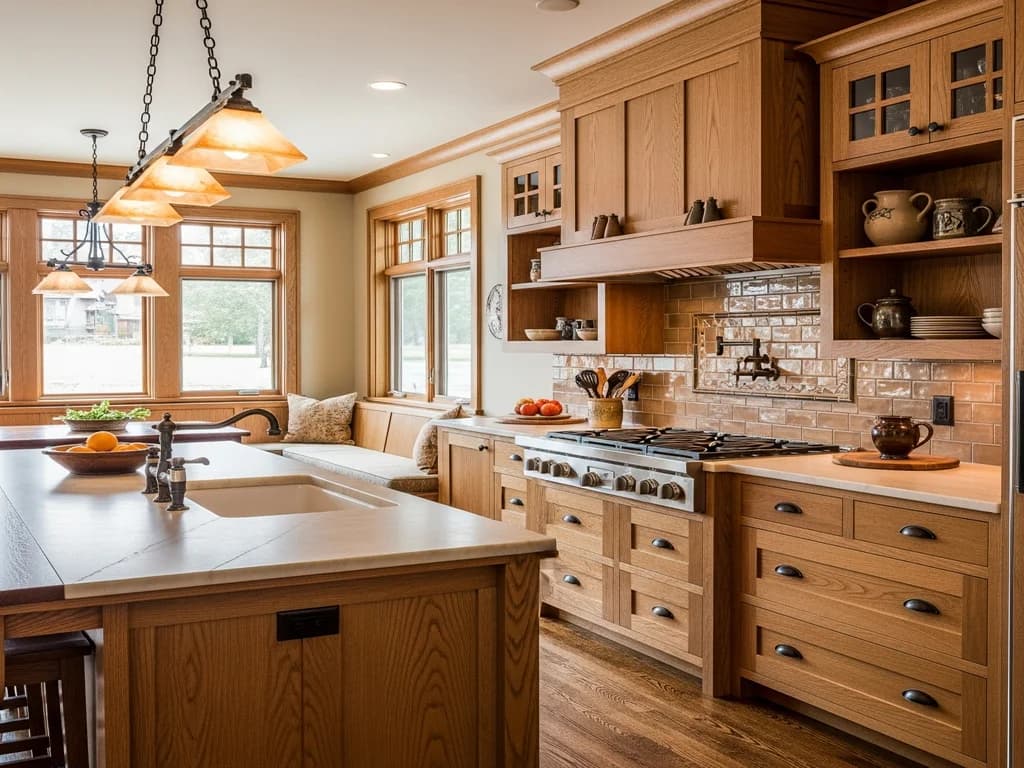
Craftsman cabinetry grows out of the Arts and Crafts movement, which prized honest materials, visible joinery, and handwork over machine-made ornament. In a kitchen that translates to sturdy, simple cabinetry that shows the beauty of the wood and the quality of its construction rather than hiding them behind paint or elaborate profiles.
It is a warm, grounded, unpretentious style — substantial without being formal, detailed without being fussy. For homeowners who value craftsmanship for its own sake, nothing else quite speaks the same language, and it is a natural fit for a custom shop whose whole reason for being is well-made work.
Doors, wood, and joinery
The Craftsman door is typically a flat-panel or a simple recessed-panel front with a substantial, square frame — heavier and more grounded than a delicate Shaker, with an emphasis on solid stock. Quarter-sawn white oak is the signature wood, revealing the dramatic ray-fleck figure that is a hallmark of the style; hickory and other honest hardwoods also suit it.
Joinery is meant to be seen and admired. Exposed elements — pegged detail, corbels, sturdy furniture bases, and a substantial hood — celebrate how the piece is put together. Cabinetry often reads as freestanding furniture, with legs, aprons, and open shelving that reinforce the handmade, built-to-last character.
Finishes and hardware
Finishes stay natural and warm — medium to rich stains that let the oak’s figure and color lead, in a low-sheen, hand-rubbed feel. The point of a Craftsman kitchen is to show the wood, so heavy paint and high gloss are avoided; the finish protects and enriches the grain rather than covering it.
Hardware is simple, honest, and often hand-forged in feel: hammered or satin bronze and iron pulls and knobs, cabinet latches, and pieces with visible, functional character. The metal is chosen to age gracefully and to echo the handmade spirit of the woodwork.
How it reads in a Treasure Valley home
Craftsman cabinetry suits Idaho’s bungalows and older character homes, as well as lodge- and cabin-style properties in the foothills and toward the mountains. In those homes it feels authentic and settled, a natural extension of the home’s existing trim, beams, and woodwork.
It also brings warmth and substance to a larger new build designed with a lodge or mountain sensibility. A quarter-sawn oak kitchen with a substantial hood and furniture-style island gives an open great room a grounded, handcrafted center that feels rooted in place.
Who it is for
Craftsman is for homeowners who love natural wood, visible craftsmanship, and a warm, honest kitchen that will age beautifully. It suits owners of bungalows and character homes, lovers of the Arts and Crafts tradition, and anyone drawn to substance over sheen.
If you want the same warmth with a lighter, brighter hand, modern farmhouse shares the love of natural material; if you want more formality and detail, traditional is the neighbor that layers on ornament while keeping the furniture-grade quality.
From the Journal
Read More on Craftsman Kitchens
Craftsman Cabinets: Common Questions
What wood is most authentic for a Craftsman kitchen?
Quarter-sawn white oak is the signature Craftsman wood. The quarter-sawing process reveals the dramatic ray-fleck figure that defines the Arts and Crafts look. Hickory and other honest hardwoods also suit the style, but quarter-sawn oak is the most authentic and the most striking choice.
How is Craftsman different from farmhouse or traditional?
Craftsman emphasizes natural wood, visible joinery, and Arts-and-Crafts restraint — it is rarely painted and avoids ornament. Farmhouse is lighter and often painted with country details like apron sinks; traditional is more formal, with raised panels, glazing, and layered mouldings. Craftsman sits between them, warm and honest but grounded rather than decorative.
Can a Craftsman kitchen feel bright rather than dark?
Yes. While Craftsman leans toward natural wood tones, choosing a lighter stain on white oak, adding glass-front uppers, and pairing the cabinetry with light countertops and walls keeps the room warm and open rather than heavy. We balance the palette so the wood is celebrated without darkening the space.
Explore Other Kitchen Styles
Ready to Build a Craftsman Kitchen?
Every Alderwood kitchen begins with a design conversation. Tell us about your home and how you live in it, and we’ll design, build, and install a kitchen that fits your space exactly.