The classic that deepens to a warm, aged glow
American Cherry Cabinets
American black cherry is the classic furniture hardwood, prized for a fine, satiny grain and a warmth that only grows richer with time. It is the wood that famously darkens as it ages, ripening from a light pinkish tan into the deep reddish-brown glow that made it a signature of fine cabinetry.
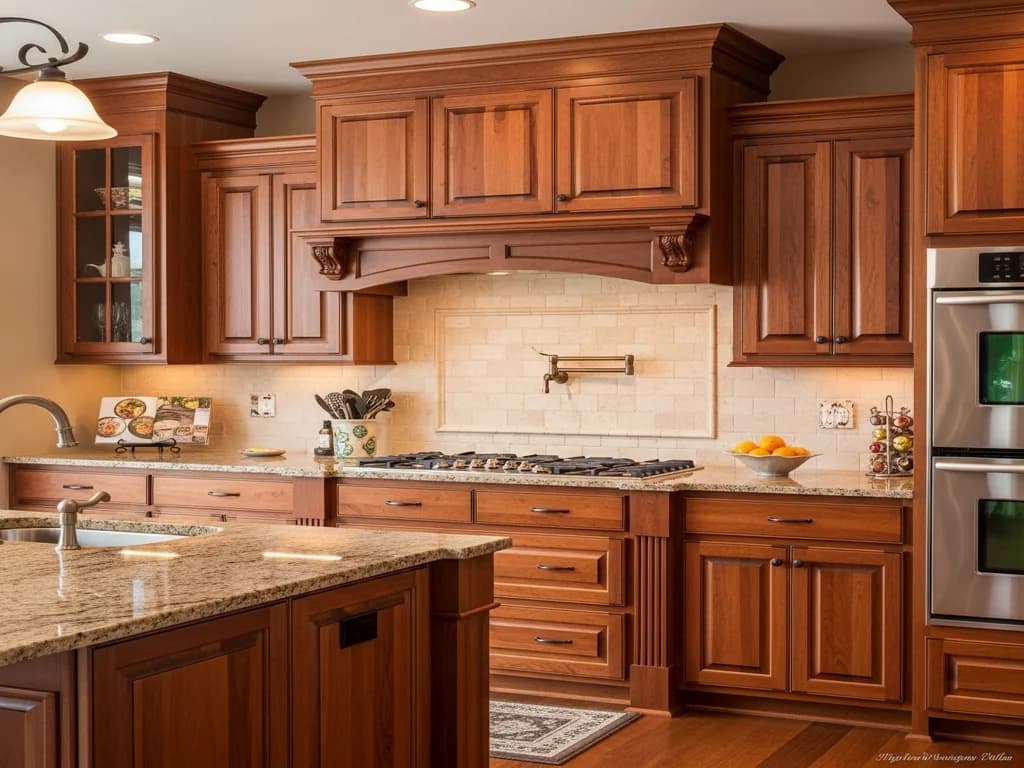
- Grain
- Fine, smooth, gently flowing grain
- Color
- Pinkish-tan when new; deepens to rich reddish-brown
- Hardness (Janka)
- 950 lbf
- Cost tier
- Premium (illustrative)
Character and grain
Cherry has one of the smoothest, most refined grains of any domestic hardwood — fine, close, and gently flowing, with occasional gum pockets, pin knots, and mineral flecks that mark it as genuine natural wood. Its surface finishes to a satiny, almost polished feel. That elegant, understated figure is why cherry has been a fine-furniture wood for centuries, and why it reads as quietly upscale rather than rustic or loud.
Color and how it ages
Cherry’s defining trait is that it darkens dramatically with light and age. New cherry is a light pinkish-tan that can look almost pale; over months and years, exposure to sunlight ripens it into a deep, warm reddish-brown. This is natural and expected — it is why cherry cabinets look richer a year after install than the day they went in. Two practical notes follow from it: any area kept covered (behind a coffee maker, under a cutting board) will lighten less and can show a shadow until the wood catches up, and staining cherry very dark up front is often unnecessary since the wood does much of that work on its own. A UV-inhibiting topcoat evens and slows the process.
Hardness and Idaho durability
At roughly 950 on the Janka scale, cherry is a medium-hardness hardwood — a little softer than walnut, well below oak and hickory. It is stable and works beautifully, but it will show dings more than the harder woods, which many owners accept as part of an heirloom, lived-in piece. In the dry Treasure Valley climate cherry is dimensionally reliable; we build cases in plywood and use a durable catalyzed topcoat so the finish protects a somewhat softer surface through daily use.
Cost and where it fits a budget
Cherry is a premium hardwood, priced above oak and maple and generally near or just below walnut depending on grade. Selecting boards for consistent color — since cherry’s sapwood is much paler than its heartwood — is part of what you pay for in fine cherry cabinetry. It is a worthwhile investment for a traditional or transitional kitchen where you want warmth, refinement, and a wood that improves with age.
Door styles and kitchen styles it suits
Cherry is beautiful on raised-panel, beaded, and classic Shaker doors, and lends itself to furniture-style detailing — turned legs, glass-front uppers, crown moldings. It is the natural choice for traditional and warm-transitional kitchens, libraries, and studies, and pairs elegantly with brass or bronze hardware and stone counters. It suits the more formal and established homes of Boise’s north-end, Eagle, and the historic districts.
Still weighing one wood against another? Our cabinet wood species guide compares knotty alder, white oak, hickory, maple, and walnut side by side to help you choose the right one for your home.
American Cherry at a Glance
- Fine, satiny grain with a refined, upscale look
- Deepens naturally from pinkish-tan to rich reddish-brown
- Medium hardness (Janka ~950) — an heirloom, lived-in wood
- A classic fine-furniture hardwood, premium-tier
- Ideal for traditional, transitional & furniture-style kitchens
American Cherry Cabinets — Common Questions
Why do cherry cabinets change color over time?
Cherry naturally darkens with exposure to light. It starts as a light pinkish-tan and ripens over months and years into a deep, warm reddish-brown — the rich glow cherry is known for. It is a normal, expected characteristic, not a flaw, and a UV-inhibiting topcoat helps it darken more evenly.
Will areas under appliances stay lighter?
Yes, temporarily. Because cherry darkens with light, anything that shades a section of a door — a coffee maker, a cutting board — slows the darkening there, so you may see a lighter patch. Once the item is moved and that area gets normal light exposure, it catches up and the color evens out over time.
Are cherry cabinets durable enough for a kitchen?
Cherry is a medium-hardness hardwood — stable and long-lasting, but softer than oak or hickory, so it shows dings more readily. Many owners see that as part of an heirloom piece that ages gracefully. We build the cases in plywood and use a durable catalyzed topcoat to protect the surface through daily use.
Explore Our Other Cabinet Woods
Knotty Alder Cabinets
Warm, knotty, and made for foothill and mountain-modern homes — the wood our shop is named after.
Learn MoreWhite Oak Cabinets
Rift and quarter-sawn white oak — the tight, linear grain behind today’s warm-modern kitchens.
Learn MoreBlack Walnut Cabinets
Rich chocolate tone and an elegant, stable grain — the wood we reach for on islands and feature pieces.
Learn MoreHard Maple Cabinets
Fine-grained and hard — the go-to substrate for smooth painted and inset cabinetry.
Learn MoreHickory Cabinets
The hardest and most dramatic cabinet wood — bold grain, high contrast, built to take a beating.
Learn MoreServing the Treasure Valley
Keep Planning Your American Cherry Kitchen
We design, build, and install american cherry cabinetry for homeowners and builders across Treasure Valley, Idaho. Explore the styles and services behind a custom project.
Ready to Build in American Cherry?
Every Alderwood project begins with a design conversation. Tell us about your space and the wood you love, and we'll take it from there.