The rustic, character-rich hardwood we were named for
Knotty Alder Cabinets
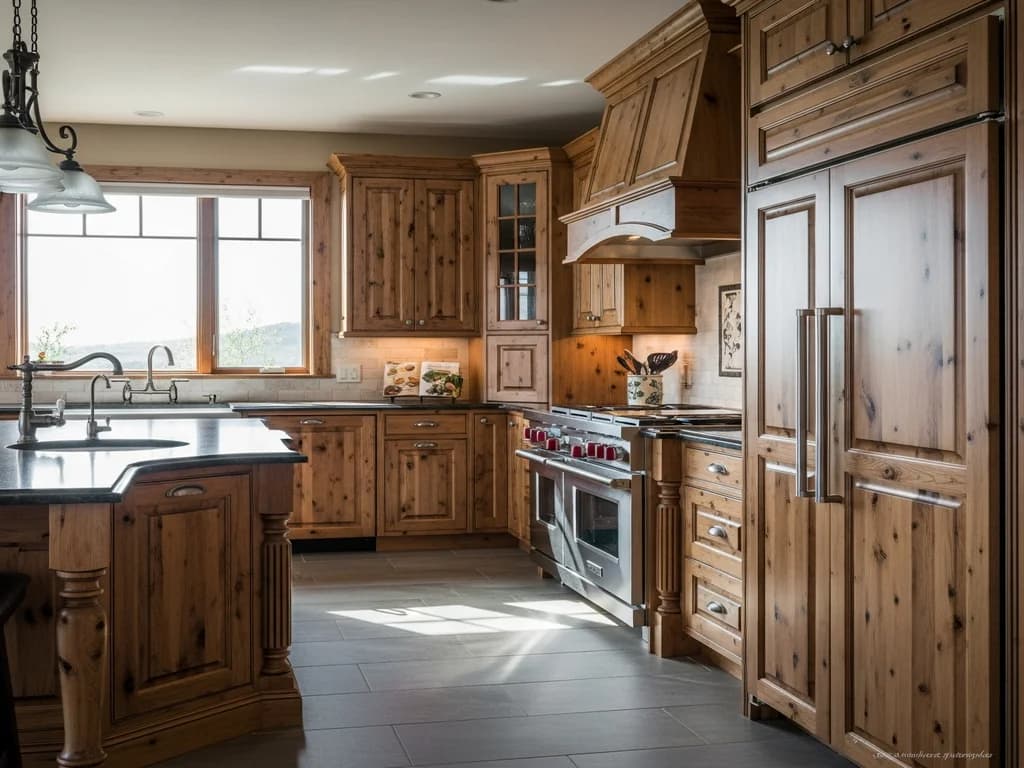
Knotty alder is the wood we are named for, and the one we build most for the foothill and mountain-modern homes around Eagle, Star, and the Boise bench. Its open character knots and warm honey tone read handmade and lived-in the moment the doors go on.
- Grain
- Soft, straight grain with tight knots and burl clusters
- Color
- Warm honey to reddish-tan, deepens with age
- Hardness (Janka)
- 590 lbf
- Cost tier
- Accessible (illustrative)
Character and grain
Alder is a softer hardwood with a fine, even, straight grain and a naturally warm honey-to-tan color. What makes it "knotty" is the grade: we select boards for their sound knots, burl clusters, and mineral streaks, so every door carries the marks of the tree rather than a uniform factory face. That variation is the whole point — it is what gives knotty alder its handmade, character-driven look. A clear alder grade is available when you want the same warm tone with far fewer knots and a cleaner face.
Color and how it takes finish
Alder has a close, even grain that absorbs stain more predictably than oak or hickory, which is why it is one of the most forgiving woods to color. It takes rich, warm stains beautifully — from a light natural clear that shows the honey tone, through the mid-brown fruitwood and chestnut ranges, to deep espresso. Because it stains so evenly, alder is often used to imitate pricier species like cherry at a fraction of the cost. It can be painted, but its softness and knots make it a second choice for a smooth painted face; for painted cabinetry we steer you to maple.
Hardness and Idaho durability
At roughly 590 on the Janka hardness scale, alder is the softest of the woods we build with — softer than pine in some boards. In practice that means it dents and dings more readily than oak, hickory, or maple. Most homeowners who choose it embrace this: nicks and the patina of daily use blend into the already-rustic, knotty character rather than standing out. In the Treasure Valley’s dry, high-desert air, alder is dimensionally stable and moves modestly with the seasons, so it holds finish and joinery well. If you want the alder look in a hardworking family kitchen, we build the cases in plywood and reserve the solid wood for doors and face frames.
Cost and where it fits a budget
Knotty alder is one of the most accessible solid hardwoods we offer, which is a large part of its popularity — it delivers a genuine solid-wood, character-grade look without the price of walnut or cherry. Clear alder costs a little more than knotty because the yield of clean boards is lower. It is a smart choice when you want real wood warmth across a whole kitchen while keeping the material budget grounded.
Door styles and kitchen styles it suits
Alder is at its best in door styles that let the knots show: a classic Shaker, a raised-panel, or a rustic plank-look door. It suits mountain-modern, transitional, farmhouse, and craftsman kitchens, and pairs naturally with wrought or matte-black hardware, hammered-copper sinks, and stone or butcher-block counters. It is the go-to wood for the timber-framed and stone-accented homes of the Boise foothills, Eagle, and Star.
Still weighing one wood against another? Our cabinet wood species guide compares knotty alder, white oak, hickory, maple, and walnut side by side to help you choose the right one for your home.
Knotty Alder at a Glance
- Warm honey-to-tan tone with signature sound knots
- Takes warm stains evenly and richly
- Softest of our cabinet woods (Janka ~590) — dents blend into the rustic look
- The most accessible solid-hardwood option we build
- Ideal for mountain-modern, farmhouse & foothill homes
Knotty Alder Cabinets — Common Questions
Are knotty alder cabinets durable enough for a busy kitchen?
Yes, with realistic expectations. Alder is a softer hardwood, so it shows dings more readily than oak or maple — but on a knotty, character grade those marks blend into the look rather than standing out. We build the cabinet cases in plywood and use full-extension soft-close hardware so the working parts stay tight for years.
Can knotty alder be painted?
It can, but it is not our first choice for paint. Alder’s softness and knots can telegraph through a smooth painted face over time. When you want painted cabinetry we build on maple instead, which finishes dead-flat. Alder’s strength is stain, where its even grain and warm tone shine.
What is the difference between knotty and clear alder?
They are the same species, sorted by grade. Knotty alder is selected to show sound knots and burl for a rustic, character look; clear alder is sorted for clean, knot-free faces and a smoother, more refined appearance. Clear alder costs a little more because fewer boards make the grade.
Explore Our Other Cabinet Woods
White Oak Cabinets
Rift and quarter-sawn white oak — the tight, linear grain behind today’s warm-modern kitchens.
Learn MoreBlack Walnut Cabinets
Rich chocolate tone and an elegant, stable grain — the wood we reach for on islands and feature pieces.
Learn MoreHard Maple Cabinets
Fine-grained and hard — the go-to substrate for smooth painted and inset cabinetry.
Learn MoreHickory Cabinets
The hardest and most dramatic cabinet wood — bold grain, high contrast, built to take a beating.
Learn MoreAmerican Cherry Cabinets
A smooth, satiny grain that deepens to a warm reddish glow — the classic furniture hardwood.
Learn MoreServing the Treasure Valley
Keep Planning Your Knotty Alder Kitchen
We design, build, and install knotty alder cabinetry for homeowners and builders across Treasure Valley, Idaho. Explore the styles and services behind a custom project.
Ready to Build in Knotty Alder?
Every Alderwood project begins with a design conversation. Tell us about your space and the wood you love, and we'll take it from there.