Cabinet Door Style
Applied-Moulding Cabinet Doors
Decorative mouldings layered onto the door face — the most formal, furniture-grade door, with the depth of a fine piece of casework.
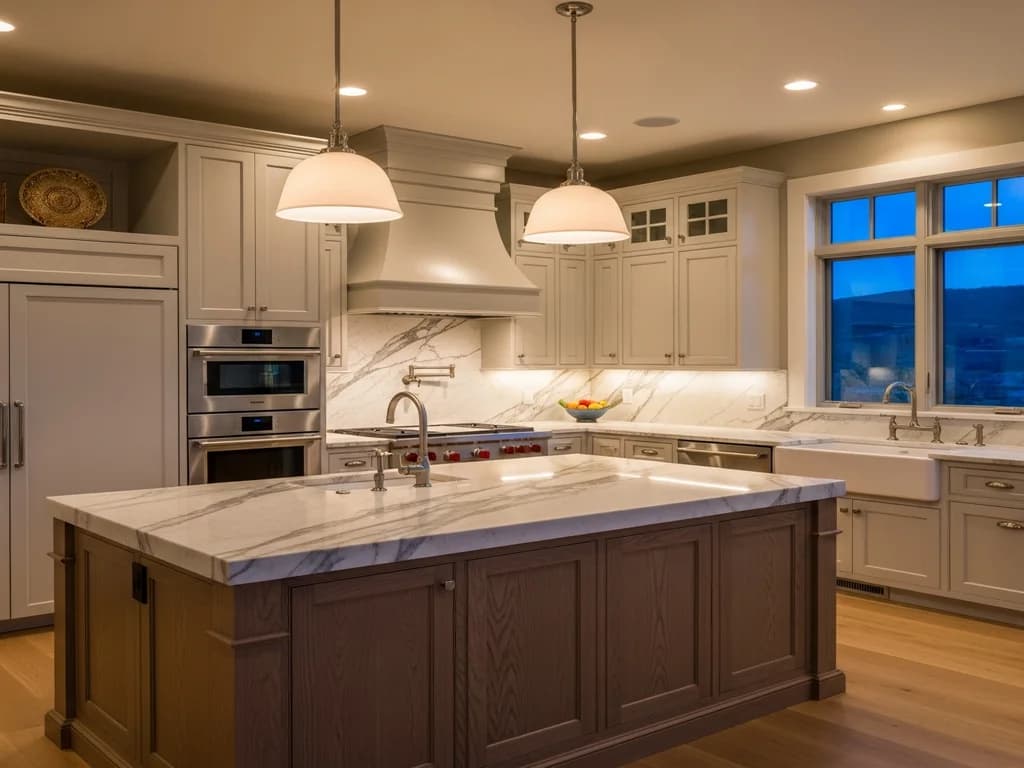
Door style vs. construction: This guide covers the look of the door front. How that door sits on the cabinet — inset within the face frame, overlaying it, or on a frameless box — is a separate decision that affects fit, storage, and cost. See our door and construction selection guide and Inset vs. Full-Overlay vs. Frameless to understand both together.
What an applied-moulding door is
An applied-moulding door starts from a frame-and-panel base — often a flat or lightly raised panel — and adds a decorative moulding applied to the face, usually framing the inner edge of the panel. That extra layer creates a second, inner frame and a stronger play of light and shadow than a standard door can achieve.
It is the most formal and detailed of the door styles, reading as furniture-grade casework rather than kitchen cabinetry. The applied moulding can be simple and refined or richly ornate, which lets the door suit anything from an elegant transitional kitchen to a fully traditional one.
How it is built
A base door is built as a framed panel door, then a separate moulding profile is milled, mitered at the corners, and applied to the face — a process that demands tight, clean miters and careful finishing so the added layer reads as integral to the door. The moulding profile can be matched to the room’s other millwork for a cohesive, whole-home result.
Because the added moulding creates crisp edges and recesses, these doors take a painted finish with glazing especially well — the glaze settles into the profile and corners, emphasizing the layered detail. The result is depth and richness beyond what a single-plane door provides.
Where it fits best
Applied-moulding doors suit the valley’s more formal and estate-scale homes — larger foothill properties and custom builds with detailed trim packages, where the cabinetry is meant to feel like built-in furniture. They pair naturally with layered crown, furniture bases, and decorative posts.
Used on a whole kitchen they read distinctly formal; used selectively — on an island, a hutch, or a furniture piece within an otherwise simpler kitchen — they add a note of elegance without committing the entire room to a traditional look. We match the moulding profile to the level of detail your home calls for.
From the Journal
Keep Reading
Applied-Moulding Doors: Common Questions
How is an applied-moulding door different from a raised-panel door?
A raised-panel door gets its depth from a contoured center panel machined into the door. An applied-moulding door adds a separate decorative moulding onto the face of a framed door, creating an extra inner frame and more layered detail. Applied-moulding doors are generally the more formal and ornate of the two.
Can applied-moulding doors work in a less formal kitchen?
Yes, when used selectively and with a refined profile. A single applied-moulding element on an island or hutch adds elegance to an otherwise simpler kitchen without making the whole room feel formal. The profile can also be kept clean and understated to lean transitional rather than fully traditional.
Why are applied-moulding doors more expensive?
They involve building a framed door and then milling, mitering, and applying a separate moulding to its face, followed by careful finishing so the layers read as one. That added machining, precise corner work, and finishing — especially with glazing — is where the extra cost lives.
Explore Other Door Styles
Considering Applied-Moulding Doors?
We help you weigh door style, construction, wood, and finish against real samples during design — then build exactly what you approve.