Cabinet Door Style
Glass-Front & Mullion Cabinet Doors
A framed door with a glass panel — for display, light, and a softer, layered evening glow in the kitchen.
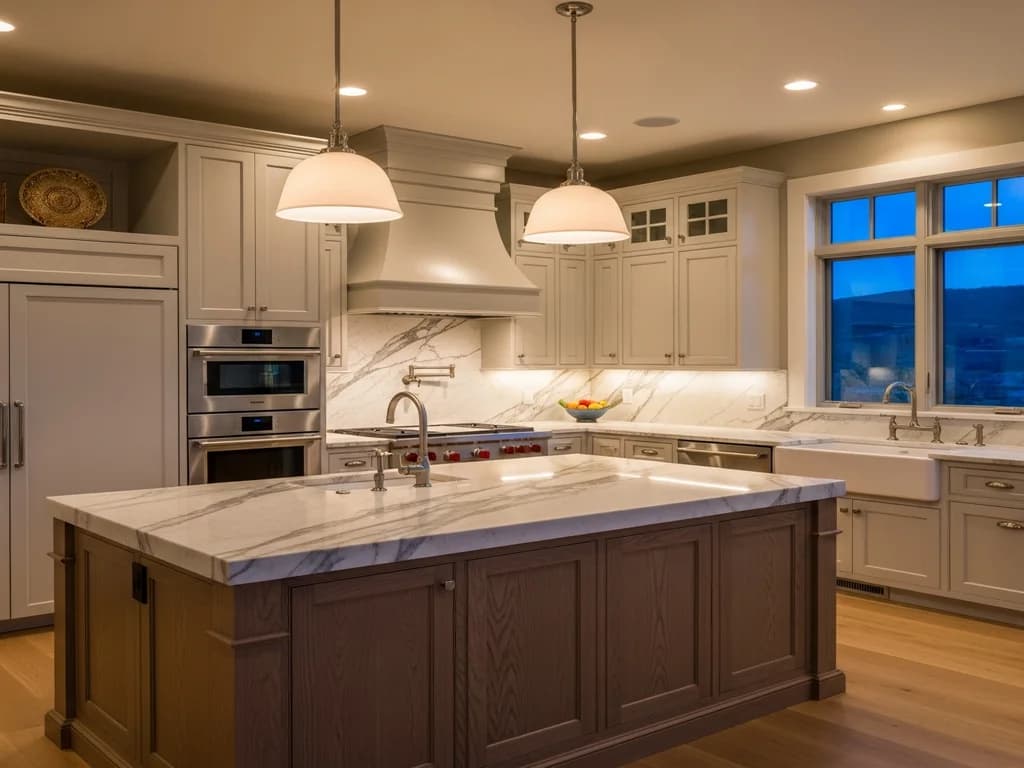
Door style vs. construction: This guide covers the look of the door front. How that door sits on the cabinet — inset within the face frame, overlaying it, or on a frameless box — is a separate decision that affects fit, storage, and cost. See our door and construction selection guide and Inset vs. Full-Overlay vs. Frameless to understand both together.
What glass-front and mullion doors are
A glass-front door replaces the solid center panel with glass, turning an upper cabinet into a display and letting light pass through. A mullion door adds wood or metal bars (muntins) across the glass in a grid, prairie, arch, or diamond pattern, dividing the opening into panes and adding architectural detail.
The glass itself sets the mood. Clear glass shows the contents fully; seeded, reeded, or fluted glass adds texture and blurs what is behind it; frosted or antiqued glass obscures the interior almost entirely while still passing light. The choice tunes exactly how much the cabinet reveals.
How they are built
The door frame is built like any framed door, but with a rabbet cut to hold the glass rather than a floating wood panel. The glass is retained with a removable stop so it can be replaced if needed. For mullion doors, the muntin bars are joined into a grid within the frame — true divided-light construction is the most refined and the most labor-intensive version.
Glass-front cabinets are usually paired with interior lighting and a finished interior — a painted or wood-veneered back and adjustable glass or wood shelves — so the inside of the cabinet is as considered as the outside. Combined with lighting, the glass makes glassware and dishware glow in the evening.
Where they fit best
Glass-front and mullion doors are used selectively — on a cabinet or two, or a run of uppers flanking a hood or a window — rather than across a whole kitchen. Their job is to break up a bank of solid doors and create a focal point, so a little goes a long way.
The style of the glass and mullion is matched to the kitchen: clean clear or reeded glass with minimal or no mullions for a modern or transitional room; a traditional divided-light grid for a classic or farmhouse kitchen. Either way, the effect is lighter and more open than solid doors alone.
Glass-Front & Mullion Doors: Common Questions
What kind of glass is best for cabinet doors?
It depends on how much you want to show. Clear glass displays contents fully and suits neatly arranged glassware; seeded, reeded, or fluted glass adds texture and softly obscures the interior; frosted or antiqued glass hides clutter while still passing light. We show samples so you can see how each reads with your cabinetry and lighting.
Do I need to light glass-front cabinets?
You do not have to, but interior lighting is what makes them special. Lit from within, glass-front cabinets make dishware and glassware glow and give a kitchen a warm, layered look in the evening. We plan the lighting and a finished interior together so the cabinet looks intentional inside and out.
What is a mullion door?
A mullion door is a glass-front door with wood or metal bars dividing the glass into a pattern of smaller panes — a grid, prairie, arch, or diamond layout. True divided-light construction uses individual panes; simpler versions overlay a single sheet of glass with applied bars. Mullions add traditional or architectural detail to a glass door.
Explore Other Door Styles
Considering Glass-Front & Mullion Doors?
We help you weigh door style, construction, wood, and finish against real samples during design — then build exactly what you approve.