Cabinet Door Style
Raised-Panel Cabinet Doors
A traditional door with a contoured center panel that sits proud of the frame — depth, shadow, and formal character.
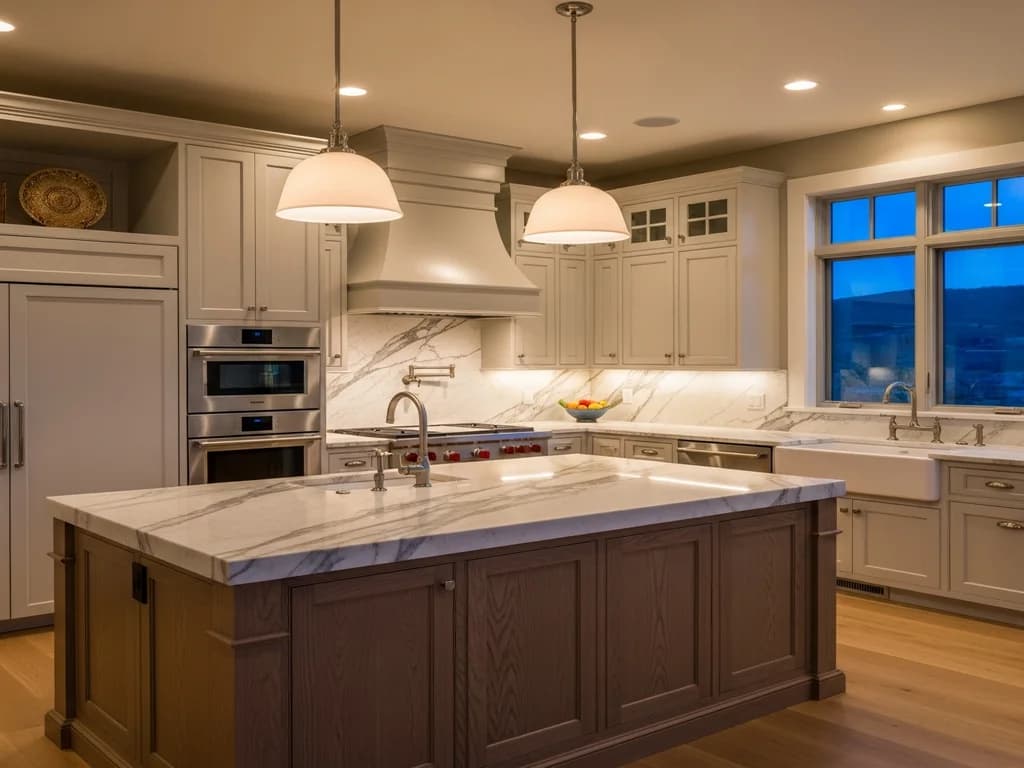
Door style vs. construction: This guide covers the look of the door front. How that door sits on the cabinet — inset within the face frame, overlaying it, or on a frameless box — is a separate decision that affects fit, storage, and cost. See our door and construction selection guide and Inset vs. Full-Overlay vs. Frameless to understand both together.
What a raised-panel door is
A raised-panel door frames a center panel that is machined so it sits elevated within the surrounding rails and stiles, with a shaped profile around its edge. Where a Shaker panel is flat and recessed, a raised panel is contoured and proud, catching light and casting shadow across the door front.
It is the most traditional and formal of the common door styles. The raised center and its surrounding profile add depth and richness that read as classic and substantial — the look most people picture when they think of a traditional, furniture-grade kitchen.
How it is built and finished
The center panel is shaped on a shaper or CNC to create the raised field and the profile that transitions it into the frame. The profile itself can be simple or ornate, which lets the same basic door read anywhere from lightly traditional to formally detailed. As with any framed door, the panel floats so it can move with the seasons.
Raised-panel doors take glazing beautifully. A thin tinted layer is wiped over the finish and settles into the profile and corners, adding definition and a hint of age. Combined with a rich stain or a soft painted finish, glazing gives the door the layered, timeless depth that suits classic interiors.
Where it fits best
Raised-panel doors suit classic and formal kitchens — larger foothill and estate-scale homes, and builds whose architecture and trim already speak a traditional language. In those settings the extra depth and detail feel grounded and intentional.
They pair naturally with other traditional millwork: layered crown, furniture-style islands, decorative feet, and turned or fluted posts. Hardware tends to be more decorative — cup pulls and ornate knobs in aged brass or bronze — to reinforce the formal character.
From the Journal
Keep Reading
Raised-Panel Doors: Common Questions
What is the difference between a raised-panel and a Shaker door?
The center panel. A Shaker door has a flat, recessed panel and a plain square frame; a raised-panel door has a contoured panel that sits proud of the frame with a shaped profile around it. The raised panel reads more traditional and formal, while the Shaker reads cleaner and more versatile.
Does a raised-panel door have to look ornate?
No. The profile can be simple or elaborate. A gently profiled raised panel in a soft painted finish reads as lightly traditional rather than heavily formal, while a deeper profile with glazing on a rich stain reads much more ornate. We tune the profile and finish to the level of formality your home calls for.
Is glazing right for a raised-panel kitchen?
It can be, when done with restraint. A subtle, tonal glaze settles into the profiles and adds depth and a hint of age that suits the style. Heavy, high-contrast glazing is what tends to date a kitchen, so we show samples and keep the glaze in balance with the rest of the room.
Explore Other Door Styles
Considering Raised-Panel Doors?
We help you weigh door style, construction, wood, and finish against real samples during design — then build exactly what you approve.