Cabinet Door Style
Beaded Cabinet Doors
A fine, rounded groove that adds quiet, tailored ornament — the detail that reads handmade without the formality of a raised panel.
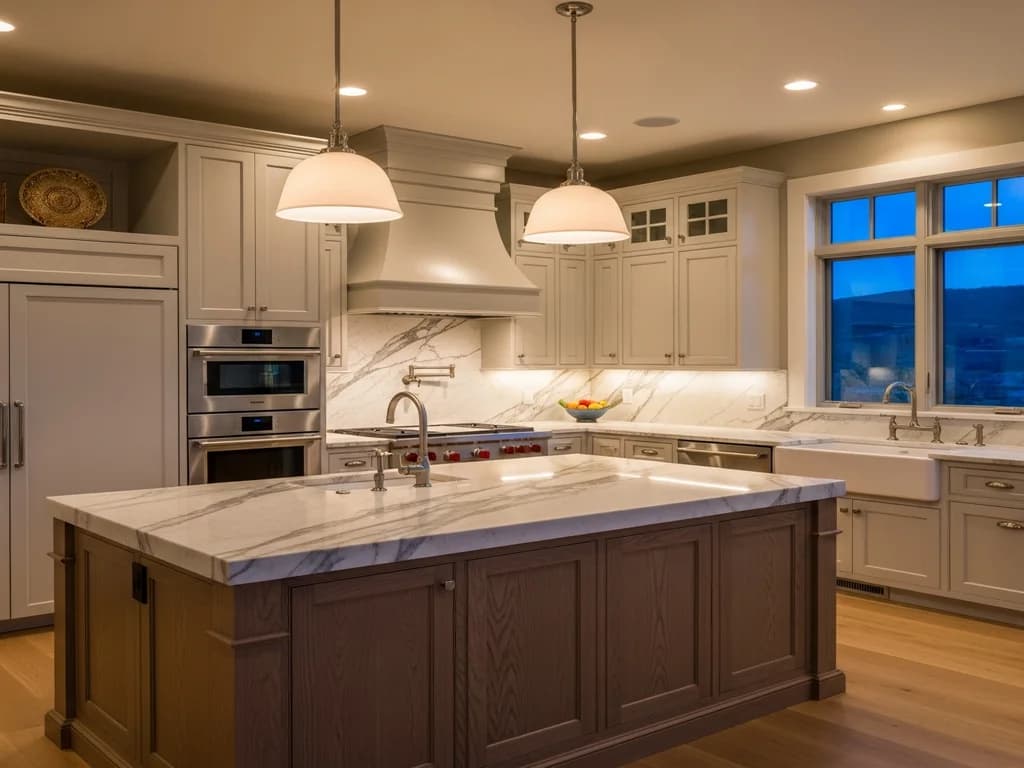
Door style vs. construction: This guide covers the look of the door front. How that door sits on the cabinet — inset within the face frame, overlaying it, or on a frameless box — is a separate decision that affects fit, storage, and cost. See our door and construction selection guide and Inset vs. Full-Overlay vs. Frameless to understand both together.
What a beaded door is
Beading is a fine, rounded groove — a “bead” — added either around the inside edge of a door’s frame or across the center panel. An inside-bead door places the groove where the frame meets the panel, adding a crisp shadow line; a beadboard panel runs a series of parallel beads across the center, echoing traditional cottage paneling.
The detail is subtle, but it changes the character of a door. It adds a crafted, traditional quality that a plain Shaker or slab door does not have, reading as quiet handwork rather than formal ornament.
How it is built
An inside bead is cut into the frame as part of the door’s profile, so it is integral to the joint rather than applied. Beadboard panels are milled with evenly spaced beads and floated within the frame like any panel, so they can move with the seasons. Both details demand clean, precise machining — the beads have to be crisp and perfectly aligned to read as intended.
Beading pairs especially naturally with inset construction, where the tailored, furniture-grade fit reinforces the handmade character. It also appears on the backs of islands, on hoods, and as an accent on select cabinets rather than across an entire kitchen.
Where it fits best
Beaded doors and beadboard detailing suit farmhouse, cottage, and traditional interiors, where the small, repeated detail reads as authentic and handmade. In the Treasure Valley they are a favorite on painted islands, apron-sink cabinets, and range hoods in modern-farmhouse kitchens.
Used selectively, beading adds interest without heaviness — a way to bring quiet ornament to a kitchen that would feel plain with flat doors alone, but which does not want the formality of a full raised-panel treatment.
Beaded Doors: Common Questions
What is the difference between an inside-bead door and beadboard?
An inside-bead door has a single fine groove where the frame meets the panel, adding a crisp shadow line around the panel. Beadboard refers to a center panel milled with a series of parallel beads, echoing traditional cottage paneling. Both add traditional character; beadboard is the more overtly farmhouse of the two.
Does beading make a kitchen feel busy?
Not when it is used with restraint. Beading is most effective as an accent — on an island, a sink cabinet, or a hood — rather than across every door in the room. Applied selectively, it adds handmade character without overwhelming the space.
Is beadboard hard to keep clean?
The grooves take a little more care than a flat surface, but a durable painted or clear finish makes them very manageable, and beadboard is typically used on lower-traffic accent areas rather than heavily used door fronts. In practice most homeowners find it no trouble to live with.
Explore Other Door Styles
Considering Beaded Doors?
We help you weigh door style, construction, wood, and finish against real samples during design — then build exactly what you approve.